Can Dehumidifier Water Be Used for Plants? Complete Safety Guide 2026
Can Dehumidifier Water Be Used for Plants? Complete Safety Guide 2026
Dehumidifier water is condensed moisture from indoor air that collects in your unit's tank. This water typically reads less than 10 ppm on a TDS meter, making it nearly as mineral-free as distilled water. In this guide, you'll learn which plants tolerate it, what contamination risks exist, and how to treat it safely.
What Is Dehumidifier Water and How Is It Collected?
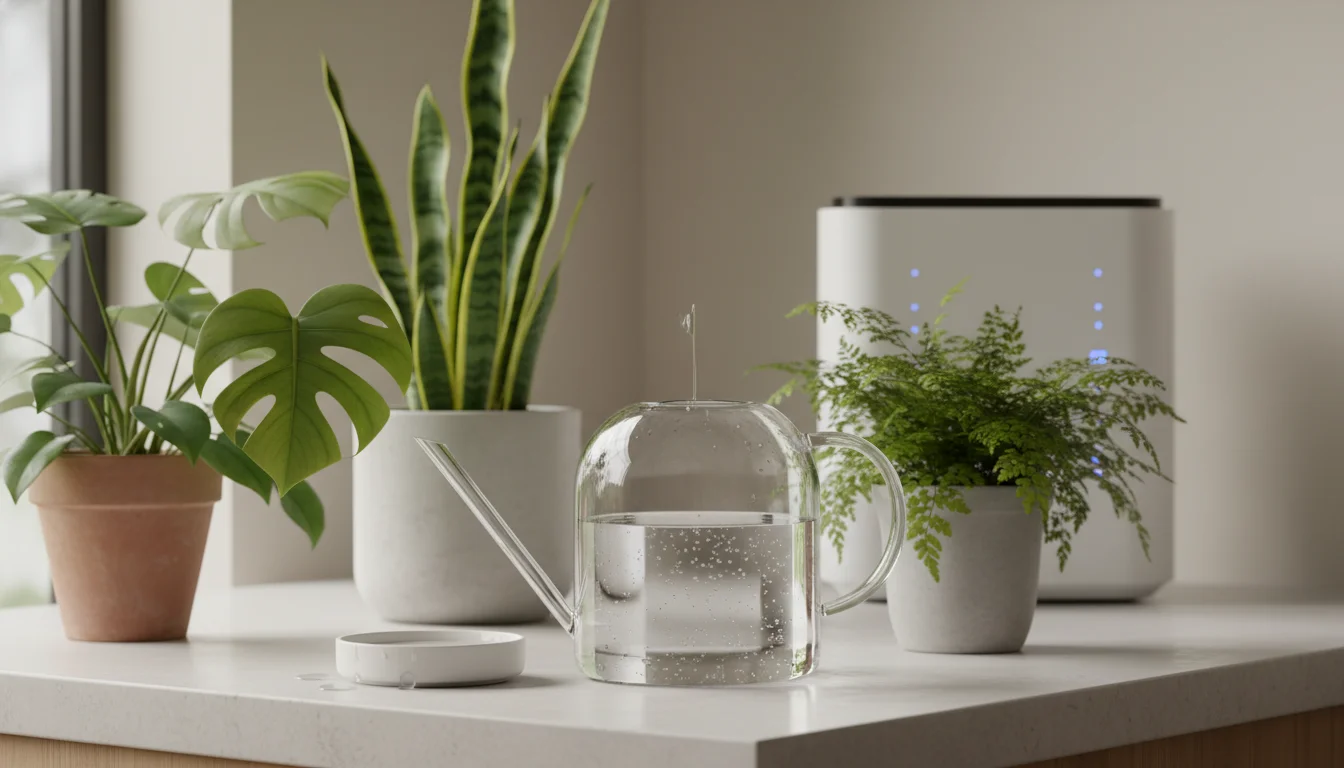
Can dehumidifier water be used for plants? Yes, for most non-edible plants. The water forms when humid air passes over cold coils inside the unit, causing vapor to condense into liquid that drips into a collection tank.
This process mirrors how morning dew forms on grass. The key difference from true distilled water lies in the collection environment. Distillation involves boiling water and recondensing the steam in a controlled setting, which removes virtually all impurities.
| Feature | Dehumidifier Water | Distilled Water | Tap Water |
|---|---|---|---|
| Process | Air condensation | Boiling and recondensing | Municipal treatment |
| Mineral Content | Very low (under 10 ppm) | Near zero | Variable (50–400 ppm) |
| Chlorine | None | None | Present |
| Contamination Risk | Moderate (airborne particles, metals) | Very low | Low |
| Cost | Free | $1–2 per gallon | Minimal |
The mineral content stays low because minerals don't evaporate with water vapor. Your dehumidifier water lacks the calcium and magnesium that cause hard water buildup in soil. The catch? It picks up whatever floats in your indoor air. Dust, mold spores, and even trace metals from copper coils end up in that tank. Abestorm notes that dehumidifier water "is not distilled" and "can contain airborne contaminants."
Is Dehumidifier Water Safe for Plants? Understanding the Risks
Safety depends almost entirely on how well you maintain your dehumidifier. A clean unit with a freshly emptied tank produces reasonably safe water. A neglected unit with a slimy tank produces bacterial soup.
The main contamination sources include:
- Bacteria and mold: Stagnant water in the collection tank breeds microorganisms within 24–48 hours
- Airborne pollutants: Dust, pet dander, and smoke particles dissolve into collected water
- Metal residues: Copper and aluminum from internal coils leach into water over time
- Mold spores: Indoor air contains mold spores that concentrate in the collection tank
The pH of dehumidifier water typically falls between 6.0 and 7.0, which sits within the acceptable range for most plants. Most houseplants prefer pH levels between 6.0 and 7.5.
I tested my own dehumidifier water after three days of sitting in the tank. The slight discoloration surprised me—that's when I started emptying the tank daily instead of waiting until it was full. [Stanford Magazine] warns that dehumidifier water "can contain dust, bacteria, and mold spores" precisely because collection happens in an uncontrolled environment.
Edible vs Ornamental Plants: Which Can Use Dehumidifier Water?
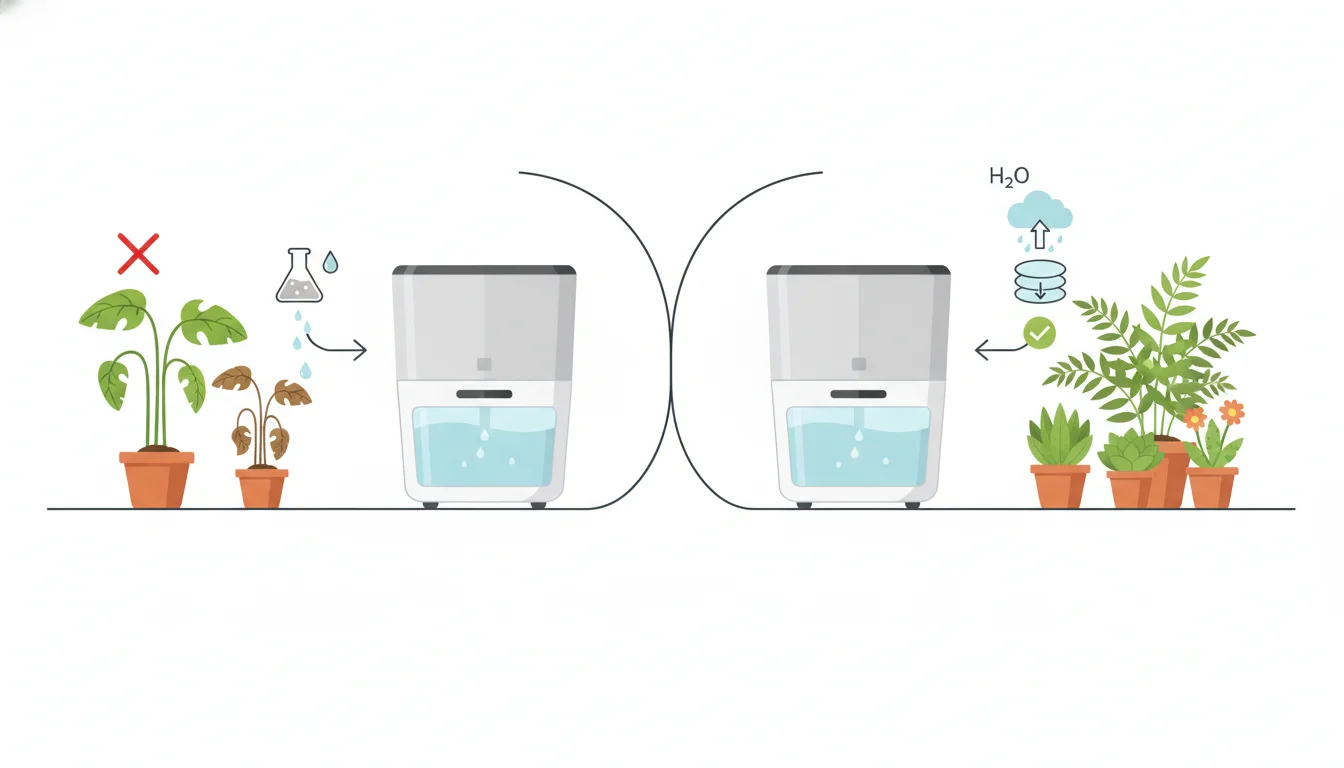
Reserve dehumidifier water for ornamental plants only. The contamination risk makes it unsuitable for anything you plan to eat, including tomatoes, herbs, lettuce, peppers, and fruit-bearing plants.
| Plant Category | Safety Level | Recommendation |
|---|---|---|
| Edible vegetables | Not recommended | Use tap or filtered water |
| Culinary herbs | Not recommended | Contamination transfers to leaves |
| Fruit-bearing plants | Not recommended | Risk outweighs water savings |
| Ornamental houseplants | Safe with maintenance | Good choice for most species |
| Succulents and cacti | Safe | Prefer low-mineral water |
| Ferns | Safe | Thrive on soft water |
| Outdoor ornamentals | Safe | Dilution in soil reduces risk |
| Lawns | Safe | Large volume dilutes contaminants |
Plants that tolerate dehumidifier water well include pothos, spider plants, snake plants, peace lilies, and most tropical foliage. These species appreciate the absence of chlorine found in tap water. Sensitive plants like African violets, orchids, and carnivorous plants require more caution—their finicky nature means any contamination shows up quickly.
The logic is straightforward: ornamental plants stay in pots where you control the environment, while edible plants transfer whatever they absorb directly to your plate. [Live Science] confirms this approach, noting that dehumidifier water works for "non-edible indoor and outdoor plants" but "should not be used on edible plants."
How to Safely Treat and Store Dehumidifier Water for Plants
Use collected water within 24–48 hours for best results. The longer water sits, the more bacteria multiply. Fresh collection minimizes contamination risks significantly.
Filtration options:
- Run water through a standard coffee filter to remove particles
- Use activated carbon filters for chemical and odor removal
- Pour through cheesecloth for quick debris filtration
Storage best practices:
- Transfer immediately to clean containers with lids
- Store away from direct sunlight to prevent algae growth
- Label containers with the collection date
- Discard any water older than 48 hours
Treatment methods:
- Let water reach room temperature before watering plants
- Add 1 tablespoon of 3% hydrogen peroxide per gallon to kill bacteria
- Mix 50/50 with tap water to restore some mineral content
- Test pH monthly if using as a primary water source
Fair warning: I skipped the hydrogen peroxide treatment for months. My fern developed a fungal issue that traced back to contaminated water. Now I treat every batch. The extra minute of effort prevents weeks of plant problems.
For gardeners using dehumidifier water regularly, invest in pH test strips. A $10 pack lasts a year and catches problems before they damage plants. [420 Magazine] suggests oxygenating the water "by shaking or adding hydrogen peroxide" to reduce bacterial risk.
Maintaining Your Dehumidifier for Plant-Safe Water
Clean your water collection tank weekly. This single habit eliminates most contamination concerns. A dirty tank defeats the purpose of using dehumidifier water in the first place.
Weekly maintenance checklist:
- Empty the tank completely, even if not full
- Wash with mild dish soap and warm water
- Rinse thoroughly to remove soap residue
- Wipe down the tank opening and drain area
- Check for discoloration or slime
Monthly maintenance:
- Clean or replace the air filter
- Wipe down the condenser coils with a damp cloth
- Inspect the drain hose for buildup
- Check seals and gaskets for mold growth
Warning signs your water is unsafe:
- Yellow, brown, or cloudy appearance
- Musty or sour smell
- Visible particles floating in water
- Slimy residue on tank walls
- Pink or black discoloration (indicates bacteria or mold)
Some newer dehumidifiers include antimicrobial tank coatings that reduce bacterial growth between cleanings. These are worth considering if you plan to use collected water regularly. Deye emphasizes that "stagnant water in the tank is a breeding ground for microorganisms" and that cleaning weekly prevents the worst contamination issues.
Dehumidifier Water vs Other Water Sources: Which Is Best?
Rainwater remains the gold standard for plant watering. Dehumidifier water comes close in mineral content but carries higher contamination risks from indoor collection.
| Water Source | Mineral Content | Contamination Risk | Cost | Best For |
|---|---|---|---|---|
| Rainwater | Very low | Low to moderate (outdoor pollutants) | Free | All plants |
| Dehumidifier water | Very low | Moderate (bacteria, metals) | Free | Ornamental plants |
| Distilled water | Near zero | Very low | $1–2/gallon | Sensitive plants |
| Tap water | Variable | Low | Minimal | Most plants |
| Filtered tap | Reduced | Very low | Filter cost | All plants |
Tap water contains chlorine that kills beneficial soil microbes. Dehumidifier water lacks this chemical, giving it an advantage for soil health. The tradeoff is contamination from your specific indoor environment.
From a sustainability perspective, the math works out. A typical dehumidifier collects 1–4 gallons daily during humid months, adding up to 30–120 gallons monthly of free water. For a household with multiple plants, this covers watering needs without touching the tap.
If you already run a dehumidifier, throwing that water down the drain wastes a resource. Using it for plants makes environmental and financial sense. The key is matching water quality to plant requirements.
FAQ
Does dehumidifier water need to be filtered before using on plants?
Basic filtration through a coffee filter removes visible particles. For regular use, running water through an activated carbon filter provides better protection against dissolved contaminants.
How long does dehumidifier water stay safe for plants?
Use collected water within 24–48 hours. Bacterial growth accelerates after this window. Water stored longer than 48 hours should be discarded or treated with hydrogen peroxide.
Will dehumidifier water harm my lawn?
Lawns tolerate dehumidifier water well. The large soil volume dilutes any contaminants, and grass proves resilient to minor water quality variations.
Does dehumidifier water have the right pH for plants?
Dehumidifier water typically measures between 6.0 and 7.0 pH. This range suits most houseplants, which prefer 6.0 to 7.5. Test periodically if using it as your primary water source.
Why does my dehumidifier water smell bad?
Odor indicates bacterial or mold growth in the tank. Empty the tank, clean it with soap and water, and begin emptying daily rather than waiting until full.
Is dehumidifier water better than tap water for houseplants?
For chlorine-sensitive plants, yes. Dehumidifier water lacks the chemicals in municipal water that harm beneficial soil organisms. For general houseplants, both work fine.
How much water does a dehumidifier produce daily?
Most residential units collect 1–4 gallons daily depending on humidity levels and unit capacity. During peak humidity months, this provides substantial free irrigation water.
Share this post
Related Articles
Would a Dehumidifier Help With Asthma? What Science Says in 2026
Would a Dehumidifier Help With Asthma? What Science Says in 2026
Best Dehumidifier for RV: Complete Buyer's Guide for 2026
Best Dehumidifier for RV: Complete Buyer's Guide for 2026
Will a Dehumidifier Get Rid of Silverfish? Complete Guide to Humidity-Based Pest Control
Will a Dehumidifier Get Rid of Silverfish? Complete Guide to Humidity-Based Pest Control