Will a Dehumidifier Get Rid of Silverfish? Complete Guide to Humidity-Based Pest Control
Will a Dehumidifier Get Rid of Silverfish? Complete Guide to Humidity-Based Pest Control
Silverfish require relative humidity above 75% to survive and reproduce. Will a dehumidifier get rid of silverfish? Yes, reducing indoor humidity below 50% creates conditions these moisture-dependent pests cannot tolerate. This guide covers optimal dehumidifier settings, placement strategies, and realistic timelines for eliminating silverfish through humidity control.
Why Silverfish Need High Humidity to Survive
Silverfish lack a waxy cuticle layer on their exoskeletons, meaning they cannot prevent water loss like other insects. They must absorb moisture directly through their skin to stay alive. This biological limitation makes them entirely dependent on humid environments.
These pests thrive in relative humidity between 75% and 95%. Drop that number below 50%, and they struggle to maintain hydration. Their eggs also fail to hatch in dry conditions, breaking the reproductive cycle entirely.
| Humidity Level | Effect on Silverfish |
|---|---|
| 75-95% | Optimal survival and reproduction |
| 50-75% | Stressed, reduced activity |
| 40-50% | Uncomfortable, population decline |
| Below 40% | Hostile, cannot survive long-term |
You'll find silverfish in predictable locations throughout your home:
- Bathrooms with poor ventilation
- Basements and crawl spaces
- Laundry rooms near water sources
- Under kitchen and bathroom sinks
- Attics with moisture buildup
These humidity requirements explain why infestations cluster in damp zones. Target these areas first when deploying dehumidifiers. According to UC Davis Integrated Pest Management, silverfish adults develop within 60 days at temperatures between 71°F and 90°F when humidity stays high.
How Dehumidifiers Work Against Silverfish Infestations
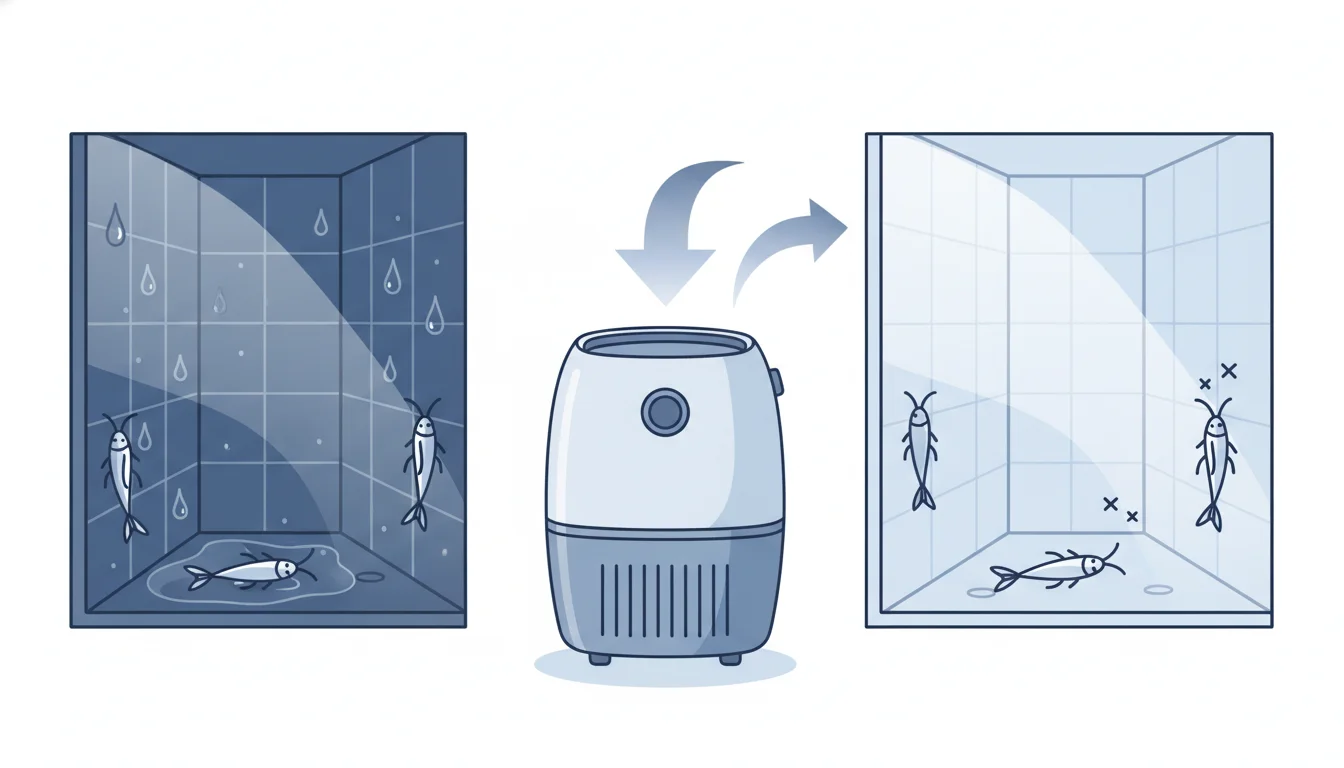
Dehumidifiers extract moisture from the air, lowering relative humidity to levels silverfish cannot tolerate. This approach addresses the root cause of infestations rather than killing individual pests.
Using a dehumidifier for silverfish control works on multiple fronts. First, adult silverfish become dehydrated and either die or relocate to find moisture. Second, eggs fail to develop properly in dry conditions. Third, the breeding cycle breaks completely when humidity stays consistently low.
Here's what makes dehumidifiers superior to chemical treatments for silverfish control:
- Targets the environmental requirement silverfish need to survive
- Prevents future infestations, not just current ones
- Leaves no toxic residues around food or living spaces
- Works 24/7 without reapplication
- Addresses mold and mildew simultaneously
Maintaining humidity below 50% makes your home uncomfortable for silverfish. Push it below 40%, and the environment becomes actively hostile. Candor Pest Control confirms that reducing humidity is one of the most effective long-term strategies for silverfish control.
I tested this approach in my own basement. Humidity readings dropped from 68% to 42% within three days of running a 50-pint dehumidifier. Silverfish sightings went from daily occurrences to zero within six weeks.
Best Dehumidifier Types and Settings for Silverfish Control
A refrigerant dehumidifier works best for most homes, pulling moisture through cooling coils that condense water vapor. These units perform optimally in temperatures above 65°F.
For cooler spaces like unheated basements or garages, consider a desiccant dehumidifier. These use absorbent materials instead of refrigeration and work efficiently down to 40°F.
| Dehumidifier Type | Best For | Temperature Range | Typical Cost |
|---|---|---|---|
| Refrigerant (30-50 pint) | Single rooms, bathrooms | Above 65°F | $150-250 |
| Refrigerant (50-70 pint) | Large rooms, basements | Above 65°F | $250-350 |
| Desiccant | Cold spaces, garages | 40-65°F | $300-500 |
| Whole-home | Severe infestations | All temperatures | $1,500-3,000 |
The best dehumidifier for silverfish depends on your space size. A 30-50 pint unit handles a single problem room. Basements and crawl spaces need 50-70 pint capacity. Whole-home systems make sense for severe, widespread infestations.
Set your target humidity between 40% and 50%. Smart dehumidifiers with built-in hygrometers maintain this range automatically. According to DIY Pest Control, silverfish cannot survive inside buildings when relative humidity stays consistently low.
Fair warning: running a dehumidifier 24/7 adds $10-30 monthly to electricity bills depending on unit size and local rates. That's still cheaper than recurring pest control services.
Strategic Dehumidifier Placement for Maximum Effectiveness
Place your dehumidifier in the room where you spot silverfish most frequently. Start there before expanding to other areas.
Effective silverfish removal with a dehumidifier requires attention to airflow. Position the unit at least 12 inches from walls. Keep furniture and curtains away from intake and exhaust vents. Restricted airflow reduces efficiency by up to 40%.
Prioritize these locations in order:
- Basement or crawl space (highest priority)
- Bathroom without exhaust fan
- Laundry room
- Kitchen under-sink area
- Attic with moisture issues
For homes over 1,500 square feet, consider multiple smaller units rather than one large one. A 50-pint unit in the basement plus a 30-pint unit in an upstairs bathroom covers more ground than a single 70-pint machine in one location.
Empty the collection tank daily during the first week. Moisture levels drop quickly at first, then stabilize. Once you reach target humidity, drainage frequency decreases. Specter Service recommends continuous drain setups for basements where moisture accumulation is severe.
Timeline: How Long Until You See Results
Expect indoor humidity to reach target levels within 24-48 hours of continuous dehumidifier operation. Silverfish activity reduction takes longer.
Most homeowners notice fewer silverfish sightings within 2-4 weeks. Complete elimination typically requires 1-3 months of consistent humidity control. Severe infestations take longer because silverfish eggs survive better in low humidity than adults do.
Factors affecting your timeline:
- Starting humidity level (higher means longer timeline)
- Home size and air circulation
- Number of moisture sources (leaks, poor ventilation)
- Severity of existing infestation
- Dehumidifier capacity relative to space
Here's what tripped me up initially: I dropped humidity to 45% and stopped monitoring. Two weeks later, readings crept back to 58% during a humid stretch, and silverfish activity resumed. Consistent monitoring matters more than reaching the target once.
Use sticky traps to track progress objectively. Better Termite suggests that catching more than 5 silverfish per week after 8 weeks indicates your moisture control needs adjustment.
Combining Dehumidifiers with Other Silverfish Control Methods
Dehumidification works faster when paired with complementary tactics. A multi-pronged approach cuts elimination time significantly.
Diatomaceous earth destroys silverfish through desiccation. Sprinkle food-grade DE in cracks, crevices, and along baseboards. The microscopic particles damage silverfish exoskeletons, causing fatal water loss within 48 hours.
Additional methods to combine with dehumidifier use:
- Fix all plumbing leaks immediately
- Seal cracks around pipes and foundations
- Install exhaust fans in bathrooms that vent outside
- Remove cardboard boxes and paper clutter
- Store books and documents in sealed plastic containers
- Use sticky traps to monitor population changes
The cost comparison favors DIY humidity control. A quality 50-pint dehumidifier costs $200-300 upfront. Professional pest control runs $150-300 per treatment, often requiring multiple visits. The dehumidifier also prevents mold and improves overall air quality.
Trust me on the clutter removal. Silverfish eat paper, glue, and fabric. That stack of old magazines in your basement serves as both a food source and a hiding spot. Removing it eliminates two problems at once.
When to Call Professional Pest Control
Some infestations exceed DIY capacity. Recognize when professional help makes sense.
Call an exterminator if silverfish persist after 3+ months of consistent humidity control below 50%. This suggests hidden moisture sources or structural issues a dehumidifier alone cannot address. Professionals locate these problems faster.
Signs you need professional silverfish control:
- Seeing 10+ silverfish daily despite low humidity
- Finding silverfish in multiple rooms simultaneously
- Noticing damage to books, wallpaper, or clothing
- Humidity won't drop below 50% despite running the dehumidifier
- Musty odors indicating hidden moisture or mold
Professional treatments work alongside dehumidifiers for faster results. Exterminators apply desiccant dusts in wall voids and use targeted insecticides in severe cases. They also identify entry points you might miss.
Structural moisture issues require specialist assessment. Foundation cracks, failed waterproofing, and hidden plumbing leaks need repair before humidity control becomes effective. A pest control professional often spots these problems during inspection.
FAQ
Do silverfish die immediately when humidity drops?
No. Adult silverfish take 1-2 weeks to dehydrate and die in low humidity environments. Eggs survive even longer in dry conditions. Expect 2-4 weeks before noticing significant population reduction.
What humidity level kills silverfish fastest?
Humidity below 40% creates hostile conditions where silverfish cannot survive more than a few weeks. Maintaining 40-45% balances pest control effectiveness with human comfort and prevents overly dry air.
Will a small portable dehumidifier work for silverfish?
Small units work for single bathrooms or closets. Spaces larger than 300 square feet need 30+ pint capacity. Undersized dehumidifiers run constantly without reaching target humidity levels.
Do I need to run the dehumidifier all the time?
Run continuously until reaching 40-50% humidity, then switch to intermittent operation. Smart dehumidifiers with built-in humidistats cycle automatically to maintain target levels.
Will silverfish come back if I stop using the dehumidifier?
Yes. If humidity rises above 50% consistently, silverfish return within weeks. Ongoing moisture control prevents reinfestation. Consider permanent installation in chronically damp spaces.
Are dehumidifiers safe to use around pets and children?
Dehumidifiers pose no chemical risks. Keep electrical cords secured and empty water tanks regularly to prevent spills. Place units where children and pets cannot tip them over.
How do I know the dehumidifier is working against silverfish?
Monitor two metrics: humidity readings and silverfish sightings. Use a separate hygrometer to verify dehumidifier accuracy. Place sticky traps to track population changes over time.
Share this post
Related Articles
Would a Dehumidifier Help With Asthma? What Science Says in 2026
Would a Dehumidifier Help With Asthma? What Science Says in 2026
Best Dehumidifier for RV: Complete Buyer's Guide for 2026
Best Dehumidifier for RV: Complete Buyer's Guide for 2026
Will a Dehumidifier Dry Out Damp Walls? Complete Guide to Wall Moisture Removal
Will a Dehumidifier Dry Out Damp Walls? Complete Guide to Wall Moisture Removal