How to Use a Dehumidifier After Water Leak: Complete Drying Guide 2026
How to Use a Dehumidifier After Water Leak: Complete Drying Guide 2026
A dehumidifier after water leak extracts moisture from air, walls, floors, and furniture to prevent structural damage and mold growth. Mold begins developing within 24-48 hours of water exposure, making rapid dehumidification critical. This guide covers runtime, humidity targets, capacity selection, and when professional intervention becomes necessary.
How Long to Run a Dehumidifier After Water Leak
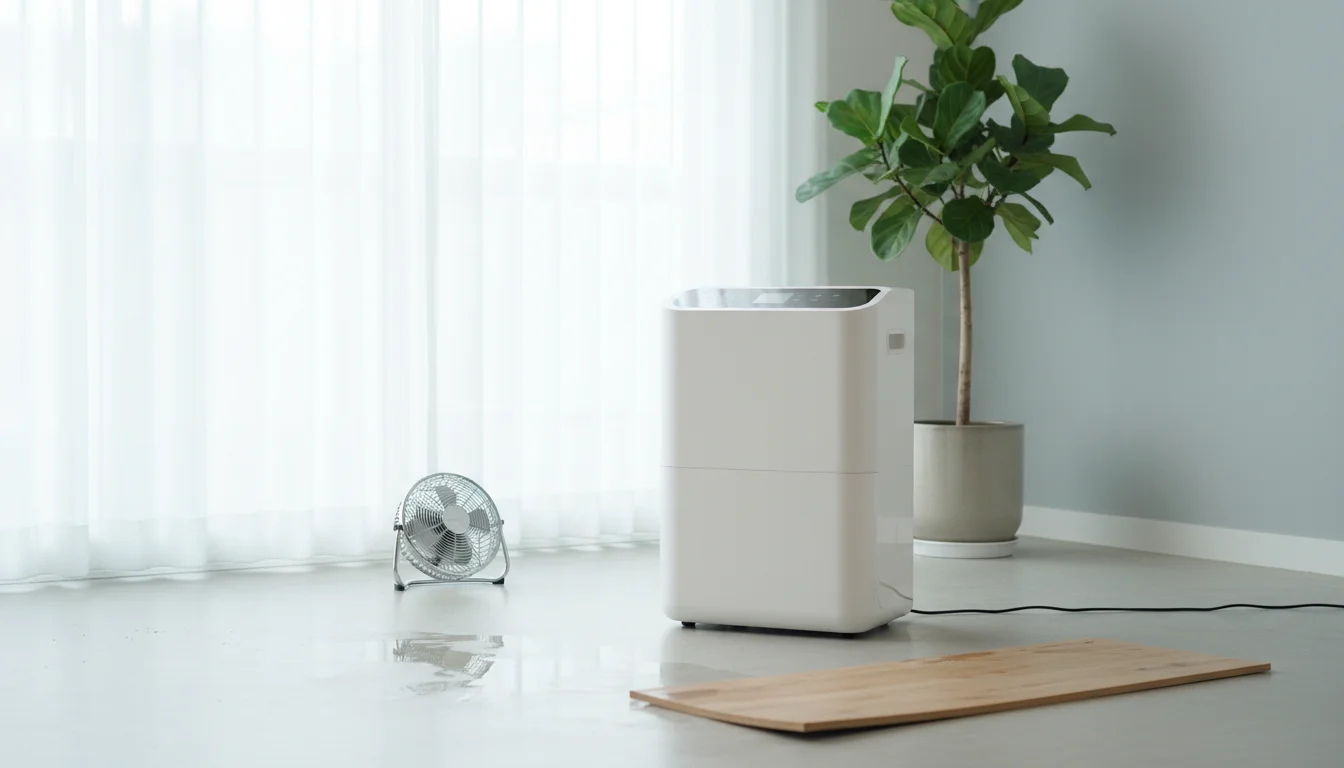
Run your dehumidifier continuously for a minimum of 48-72 hours after minor leaks, extending to 1-2 weeks for severe flooding or deep saturation into building materials.
Time alone is not a reliable indicator. Monitor humidity levels with a hygrometer and keep the unit running until relative humidity drops below 50%, with 30-40% being the ideal target for mold prevention.
| Damage Severity | Minimum Runtime | Target Humidity |
|---|---|---|
| Minor leak (surface moisture) | 48-72 hours | Below 50% |
| Moderate damage (soaked carpet, baseboards) | 3-5 days | 30-40% |
| Severe flooding (walls, insulation, subfloor) | 1-2 weeks | 30-40% |
Several factors affect how long the drying process takes:
- Leak severity: Surface moisture dries in days, while water soaked into walls or insulation requires much longer
- Room size: Larger spaces need extended runtime or multiple units
- Materials affected: Porous materials like drywall and carpet absorb more water than concrete or tile
- Ambient humidity: Summer months slow drying significantly
- Ventilation setup: Closed rooms with sealed doors and windows dry faster
Keep the unit running until there's no musty odor and surfaces feel completely dry to the touch. I learned the hard way that stopping too early leads to hidden mold problems weeks later. TSC Restoration confirms that continuous monitoring beats arbitrary time limits every time.
Choosing the Right Dehumidifier Capacity for Water Damage
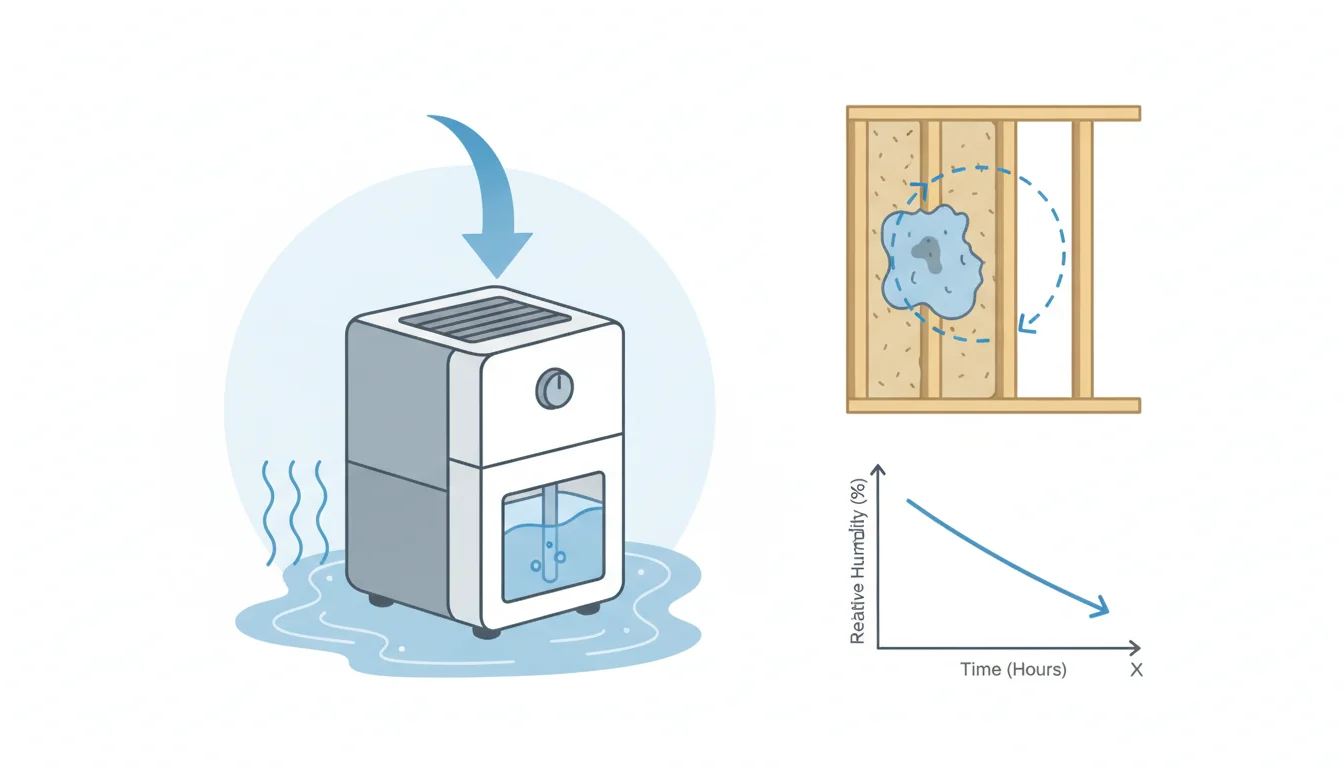
Select a unit rated for 30-50 pints per day for moderate water damage, or 70+ pints per day for severe flooding and large affected areas.
The "pints per day" rating indicates how much moisture the unit removes in 24 hours under standard conditions. Undersized units run constantly without making progress, while oversized units cost more but finish the job faster.
| Room Size | Moderate Damage | Severe Flooding |
|---|---|---|
| Up to 500 sq ft | 30 pints/day | 50 pints/day |
| 500-1,000 sq ft | 50 pints/day | 70 pints/day |
| 1,000-2,000 sq ft | 70 pints/day | 90+ pints/day or multiple units |
Two main types exist for different conditions:
- Refrigerant (condensation) dehumidifiers: Best for warm, humid environments above 65°F
- Desiccant dehumidifiers: Perform consistently in cooler temperatures and lower humidity conditions, preferred by restoration professionals
For basement flooding or cold-weather drying, desiccant models avoid the freezing issues that plague refrigerant units. Cotes notes these are the "preferred choice for professionals in the damage service industry."
Renting makes sense for one-time events. A 70-pint commercial unit rents for $50-80 per day versus $300-500 to purchase. For recurring basement moisture issues, buying pays off within a few incidents.
Step-by-Step Drying Process with a Dehumidifier
Remove all standing water first using pumps, wet/dry vacuums, or towels before deploying a dehumidifier. These units extract airborne moisture, not pooled water.
Follow this sequence for effective drying:
- Extract standing water: Use pumps for large volumes, wet/dry vacuums for smaller areas, and towels for residual puddles
- Position the dehumidifier centrally: Place it in the middle of the affected area, not against walls or in corners
- Seal the space: Close all doors and windows to prevent humid outdoor air from entering
- Add air circulation: Position fans to blow across wet surfaces, pushing evaporated moisture toward the dehumidifier
- Check humidity every 12 hours: Use a hygrometer to track progress toward the 30-50% target
- Maintain the collection tank: Empty it before it fills completely, or connect a hose for continuous drainage
- Relocate as sections dry: Move the unit to remaining damp areas once the initial zone reaches target humidity
Fair warning: the collection tank fills faster than you expect during the first 24 hours. I've returned to find units shut off because the tank was full, wasting hours of drying time. Set phone reminders to check it regularly.
Remove wet carpets, padding, and insulation that trap moisture. These materials extend drying time dramatically and become mold breeding grounds. Guarantee Restoration emphasizes that extracting wet materials speeds the entire process.
Combining Dehumidifiers with Other Drying Methods
Dehumidifiers alone work slowly. Pair them with air movers and strategic ventilation to cut drying time by 50% or more.
Air movers create evaporation from wet surfaces by pushing air across them at high velocity. This converts trapped liquid moisture into airborne water vapor, which the dehumidifier then captures.
- Air movers/fans: Position at 45-degree angles to wet surfaces, creating airflow that lifts moisture from materials
- HVAC system: Run the fan continuously (not just during heating/cooling cycles) to circulate air throughout affected areas
- Controlled ventilation: Open windows only when outdoor humidity is lower than indoor levels
- Heat application: Raise temperature to 70-80°F in cold weather to accelerate evaporation
For basement water damage, combine a dehumidifier with 2-3 high-velocity fans pointed at the floor and lower walls. This creates a drying system that outperforms either method alone.
Avoid running exhaust fans that pull conditioned air outside. You want moisture moving toward the dehumidifier, not escaping into unconditioned spaces where it causes secondary damage.
Abestorm confirms that combining dehumidifiers with air movers provides the comprehensive moisture control essential for fast restoration.
Mold Prevention During and After Dehumidification
Mold spores germinate within 24-48 hours when humidity exceeds 60%. Your dehumidifier is racing against a biological clock that starts the moment water intrusion occurs.
Different materials require different target humidity levels:
| Material | Target Humidity | Drying Priority |
|---|---|---|
| Drywall | Below 35% | High (absorbs water rapidly) |
| Hardwood floors | 30-40% | High (warps and cups) |
| Carpet and padding | Below 40% | Remove if soaked through |
| Concrete | Below 50% | Lower (dries slowly but resists mold) |
| Insulation | N/A | Remove and replace if wet |
Watch for these warning signs during drying:
- Musty or earthy odors that persist
- Visible discoloration on walls or ceilings
- Bubbling or peeling paint
- Soft spots in drywall when pressed
- Humidity readings that plateau above 50%
After reaching target humidity, inspect behind baseboards, under flooring edges, and inside wall cavities if accessible. Hidden moisture causes problems months later. A moisture meter costs $25-40 and reveals what your eyes miss.
Wear an N95 mask during the drying process. Disturbed mold spores become airborne, and elevated humidity levels encourage bacterial growth. RestoPros emphasizes the health risks of improper drying.
When to Call Professional Water Restoration Services
DIY dehumidification works for clean water from supply lines affecting limited areas. Anything involving contaminated water, structural penetration, or areas over 100 square feet benefits from professional intervention.
Call professionals immediately when you encounter:
- Category 2 water (gray water from washing machines, dishwashers, or toilet overflow with urine)
- Category 3 water (black water from sewage, flooding, or toilet overflow with feces)
- Water that has been standing more than 48 hours
- Affected areas larger than 10x10 feet
- Water inside wall cavities, under subfloors, or in HVAC systems
- Visible mold growth
- Warping, buckling, or structural deformation
Professional restoration costs $1,500-4,000 for moderate damage. DIY failures that lead to mold remediation cost $10,000-30,000. The math favors calling experts when you're uncertain.
Most homeowner's insurance covers water damage restoration from sudden events like burst pipes. Document everything with photos before starting cleanup. Your policy likely requires professional remediation for coverage of contaminated water damage.
Trust me: if the water smells bad, looks discolored, or came from outside the building, don't attempt DIY cleanup. The health risks and potential for inadequate drying aren't worth the cost savings.
FAQ
Can I use a regular household dehumidifier for water damage?
Standard 20-30 pint household units work for minor leaks in small rooms. Significant water damage requires 50-70+ pint commercial units or multiple household units running simultaneously.
Should I run the dehumidifier at night?
Run it continuously, 24 hours per day, until humidity reaches target levels. Stopping overnight extends total drying time and increases mold risk.
Why is my dehumidifier collecting no water after a leak?
Either the area has dried sufficiently, the unit is undersized for the space, the filter is clogged, or the coils have frozen (common in cold rooms). Check the filter first and ensure room temperature exceeds 65°F.
Can I open windows while running a dehumidifier?
Only if outdoor humidity is lower than indoor humidity. During summer or rainy conditions, keep windows closed. The dehumidifier works against outdoor moisture entering the space.
How do I know when the area is fully dry?
Use a moisture meter to check materials directly. Wood should read below 15%, and drywall below 1%. Humidity readings alone miss moisture trapped inside materials.
Will insurance cover dehumidifier rental costs?
Most policies cover equipment rental for sudden water damage events like burst pipes. Gradual leaks from poor maintenance are typically excluded. Document all expenses and get pre-approval when possible.
Is it safe to sleep in a room with a dehumidifier running?
Running dehumidifiers are safe for sleeping. They produce white noise, and lower humidity improves sleep quality. Ensure the unit sits on a level surface away from your bed.
What humidity level indicates hidden moisture problems?
If humidity plateaus above 50% despite continuous dehumidifier operation, moisture is trapped somewhere the airflow doesn't reach. Check behind walls, under flooring, and inside cabinets.
Share this post
Related Articles
Would a Dehumidifier Help With Asthma? What Science Says in 2026
Would a Dehumidifier Help With Asthma? What Science Says in 2026
Best Dehumidifier for RV: Complete Buyer's Guide for 2026
Best Dehumidifier for RV: Complete Buyer's Guide for 2026
Will a Dehumidifier Get Rid of Silverfish? Complete Guide to Humidity-Based Pest Control
Will a Dehumidifier Get Rid of Silverfish? Complete Guide to Humidity-Based Pest Control