Dehumidifier During Radon Test: What You Need to Know for Accurate Results
Dehumidifier During Radon Test: What You Need to Know for Accurate Results
Radon is an invisible, odorless radioactive gas responsible for approximately 21,000 lung cancer deaths annually in the United States. Running a dehumidifier during radon test periods invalidates results and forces costly retesting. This guide covers the science, timing, and preparation steps for reliable radon measurements.
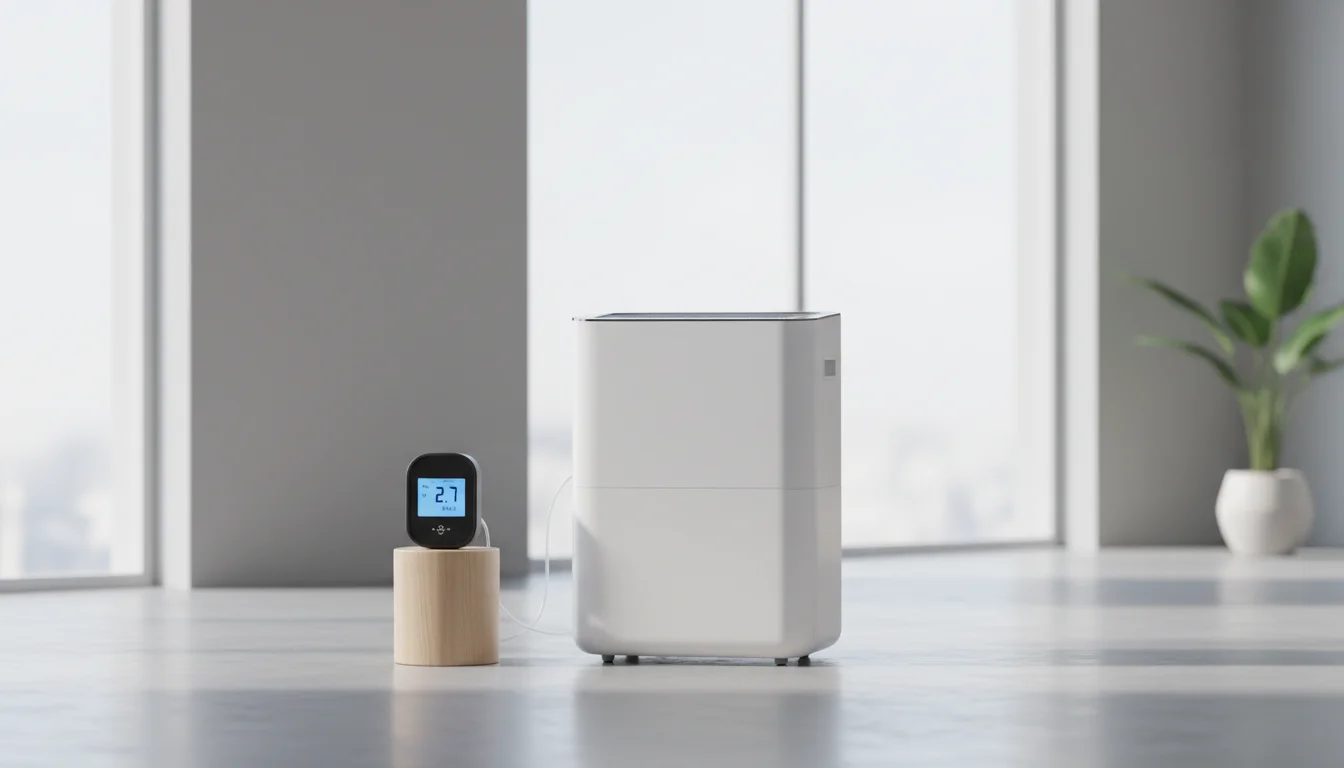
Why Dehumidifiers Affect Radon Test Results
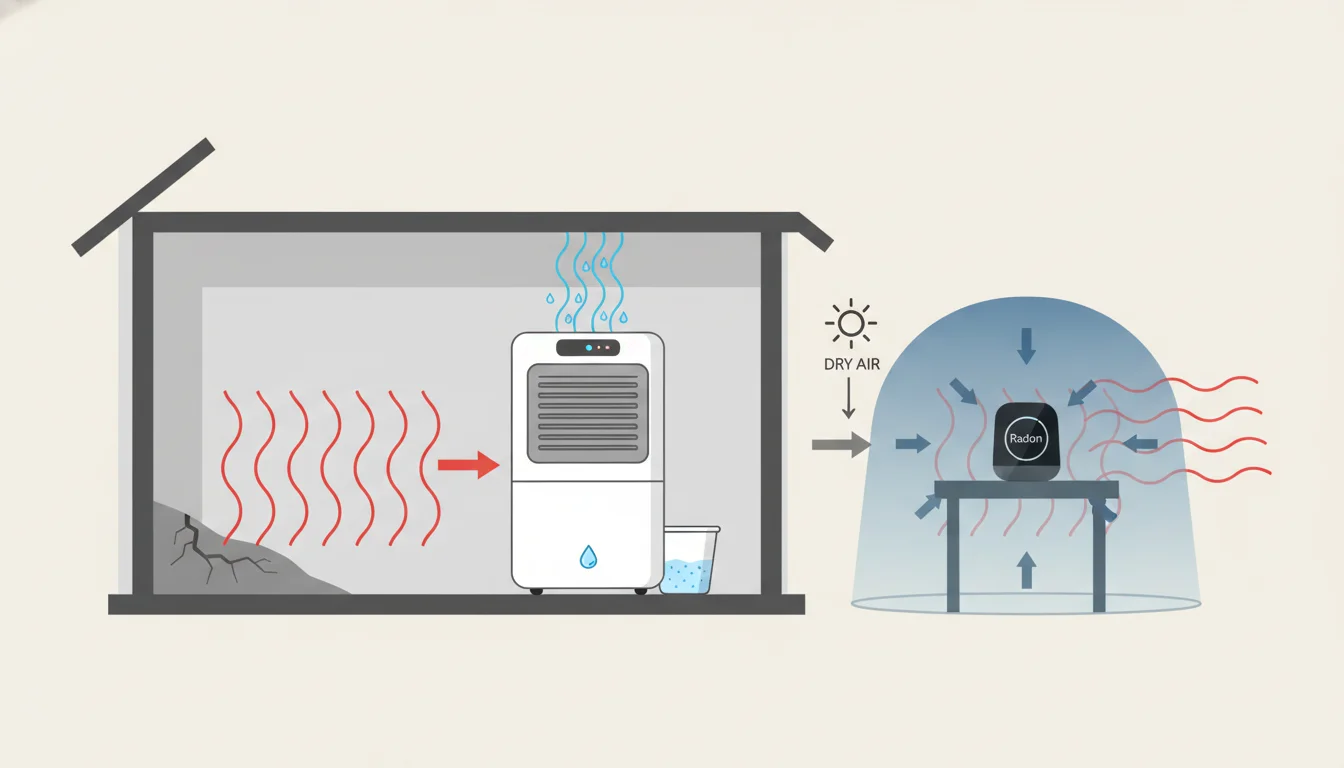
Dehumidifiers compromise radon test accuracy by creating continuous air circulation that disrupts natural gas accumulation patterns in your home.
The interference occurs through three mechanisms:
- Air movement dispersion: Dehumidifiers draw air in, remove moisture, and push conditioned air back out. This constant circulation prevents radon from settling into the stable concentrations that testing equipment needs to measure accurately.
- Pressure differential effects: Mechanical operation alters air pressure dynamics in enclosed spaces. These pressure changes pull additional radon from soil beneath your foundation or push existing radon out of the testing area.
- Passive detection disruption: Most residential radon test kits rely on radon gas settling and accumulating naturally over time. Air circulation from dehumidifiers prevents the equilibrium state these passive detectors require.
Here's the key distinction: a dehumidifier won't change the actual volume of radon in your space—it severely compromises the measurement process instead. Even with closed doors and windows, a running dehumidifier dramatically affects any radon detection system's ability to gather an accurate final reading [Yeti Restoration].
Official Testing Requirements: The 20-Foot Rule and Closed-House Conditions
EPA guidelines mandate that all air-moving devices stay at least 20 feet from the radon test location during testing periods.
| Requirement | Specification | Purpose |
|---|---|---|
| Distance from test kit | 20+ feet for all air-moving devices | Prevents airflow interference |
| Closed-house timing | 12 hours before AND during entire test | Stabilizes radon concentration |
| Window/door status | All closed except normal entry/exit | Eliminates outdoor air dilution |
| Detector placement | 1 ft from walls, 20 inches to 6 ft above floor | Avoids draft zones |
Both portable units and whole-house dehumidifiers fall under these restrictions. The American Association of Radon Scientists and Technologists (AARST) reinforces these protocols as mandatory for valid results.
State agencies from Illinois to Massachusetts to Utah publish nearly identical guidelines. This consistency exists because the physics of radon accumulation doesn't change based on location. Professional testers follow these standards strictly—and so should you if you want results that actually mean something.
How Long to Turn Off Your Dehumidifier Before Testing
The dehumidifier shutdown window extends well beyond the test duration. Plan for 60 or more hours of total downtime.
| Phase | Duration | What Happens |
|---|---|---|
| Pre-test shutdown | 12+ hours minimum | Radon levels normalize, pressure stabilizes |
| Short-term test | 48 hours to 7 days | Active measurement period |
| Total downtime | 60+ hours minimum | Complete testing cycle |
Timing your test strategically reduces discomfort. Late fall and winter naturally bring lower indoor humidity in most climates, so testing during these seasons means your basement stays more comfortable without the dehumidifier running.
I learned this the hard way during a summer test. Three days without the dehumidifier turned my basement into a damp cave. Schedule smarter than I did.
Complete Radon Test Preparation Checklist
Proper preparation prevents the frustration of invalidated results and wasted money on repeat tests.
12 hours before testing begins:
- Turn off all dehumidifiers throughout the home
- Disable portable fans and air purifiers in the testing area
- Switch off whole-house fans and attic ventilators
- Close all windows and exterior doors
During the test period:
- Keep the HVAC system running normally for temperature control
- Avoid using bathroom exhaust fans when possible
- Limit dryer operation or vent it properly
- Minimize range hood use during cooking
- Enter and exit through one door only
Test kit placement:
- Position in the lowest livable area of the home
- Place 20 inches to 6 feet above floor level
- Keep at least 1 foot from exterior walls
- Avoid areas near drafts, vents, or high humidity
The test area rule surprises most people: lowest livable area doesn't mean crawl space. It means the lowest floor you actually use or could use as living space. For most homes, that's the basement.
Portable vs Built-In Dehumidifiers: Do the Rules Differ?
Both types require shutdown during testing. The rules don't differ based on dehumidifier style.
| Dehumidifier Type | Testing Impact | Special Considerations |
|---|---|---|
| Portable units | High, often closest to test location | Easier to relocate 20+ feet away |
| Whole-house/HVAC-integrated | Moderate to high | Requires system adjustment |
| Basement-specific models | Very high | Most tests occur in basements |
Portable dehumidifiers often sit directly in basements where radon testing happens, and that proximity makes them particularly problematic. The 20-foot rule effectively means removal from most basement spaces entirely.
Built-in systems integrated with your HVAC create airflow even when humidity control isn't the primary function. Check your system settings carefully—some whole-house dehumidifiers run continuously rather than cycling based on humidity levels.
Basement dehumidifiers deserve extra attention. Radon enters homes primarily through foundation contact with soil, so your basement likely has the highest concentrations AND the dehumidifier most likely to interfere with accurate readings.
What Happens If You Run a Dehumidifier During Testing
The consequences range from wasted time to genuine health risks from false results.
- Artificially low readings: Air circulation disperses radon, showing lower concentrations than actually exist
- Invalidated professional tests: Home inspectors and certified testers will reject results and require retesting
- Real estate delays: Failed tests during home sales push back closing dates
- False safety confidence: You might believe your home is safe when radon levels actually require mitigation
The real estate scenario hits hardest financially. Retesting adds weeks to closing timelines. Buyers get nervous. Deals fall through—all because someone left a dehumidifier running.
After the Test: Resuming Dehumidifier Use and Next Steps
Resume normal dehumidifier operation immediately after sealing or removing the test kit from your home.
Your next steps depend entirely on results:
- Below 2 pCi/L: Low risk. Retest every 2 years or after major renovations.
- 2 to 4 pCi/L: Moderate levels. Consider mitigation, especially with high-risk individuals in the home.
- 4 pCi/L or higher: EPA recommends mitigation. Professional radon reduction systems are necessary.
Radon mitigation systems work independently from your dehumidifier. After installation, both operate simultaneously without interference. The mitigation system vents radon before it enters living spaces, while your dehumidifier controls moisture as always.
Schedule follow-up testing within 30 days after any mitigation work to confirm the system performs as expected.
FAQ
Can I run my dehumidifier if it's in a different room from the radon test?
Only if the dehumidifier sits more than 20 feet from the test kit and doesn't share open airflow with the testing area. Most home layouts make this distance requirement impractical. When in doubt, shut it off completely.
Will high humidity during testing affect my radon results?
Humidity itself doesn't significantly impact radon concentration readings. The testing discomfort is temporary, and accurate results matter more than three days of basement dampness.
Do I need to turn off my air conditioner during radon testing?
Standard air conditioning through your HVAC system can operate normally during testing. Window AC units within 20 feet of the test require shutdown. Central air maintains closed-house conditions without creating the localized airflow issues that dehumidifiers cause.
What if I accidentally ran my dehumidifier during part of the test?
Disclose this to whoever analyzes your results. Professional judgment determines whether partial interference invalidates the test. Generally, expect to retest for reliable readings.
How do radon mitigation systems differ from dehumidifiers?
Radon mitigation uses active soil depressurization to vent radon gas before it enters your home. Dehumidifiers only circulate and condition indoor air. They address completely different problems and don't substitute for each other.
Should I test for radon if I already have a dehumidifier running constantly?
Yes. Constant dehumidifier operation doesn't reduce radon levels in any meaningful way—it only affects measurement accuracy during testing. Your home needs proper radon assessment regardless of humidity control equipment.
Can I use a fan instead of a dehumidifier during the test period?
No. Fans create the same air circulation problems as dehumidifiers. All air-moving devices within 20 feet of the test location require shutdown during the testing window.
Share this post
Related Articles
Would a Dehumidifier Help With Asthma? What Science Says in 2026
Would a Dehumidifier Help With Asthma? What Science Says in 2026
Best Dehumidifier for RV: Complete Buyer's Guide for 2026
Best Dehumidifier for RV: Complete Buyer's Guide for 2026
Will a Dehumidifier Get Rid of Silverfish? Complete Guide to Humidity-Based Pest Control
Will a Dehumidifier Get Rid of Silverfish? Complete Guide to Humidity-Based Pest Control