Dehumidifier Smells Like Mold? Complete Cleaning & Prevention Guide (2026)
Dehumidifier Smells Like Mold? Complete Cleaning & Prevention Guide (2026)
A dehumidifier smells like mold when stagnant water, dirty filters, or contaminated coils allow mold and bacteria to thrive inside the unit. Consumer Reports recommends deep cleaning and sanitizing the tank at least once every week or two to prevent these contaminants from taking hold. This guide covers the causes, health risks, step-by-step cleaning methods, and maintenance schedules to eliminate musty odors for good.
Why Does Your Dehumidifier Smell Like Mold?
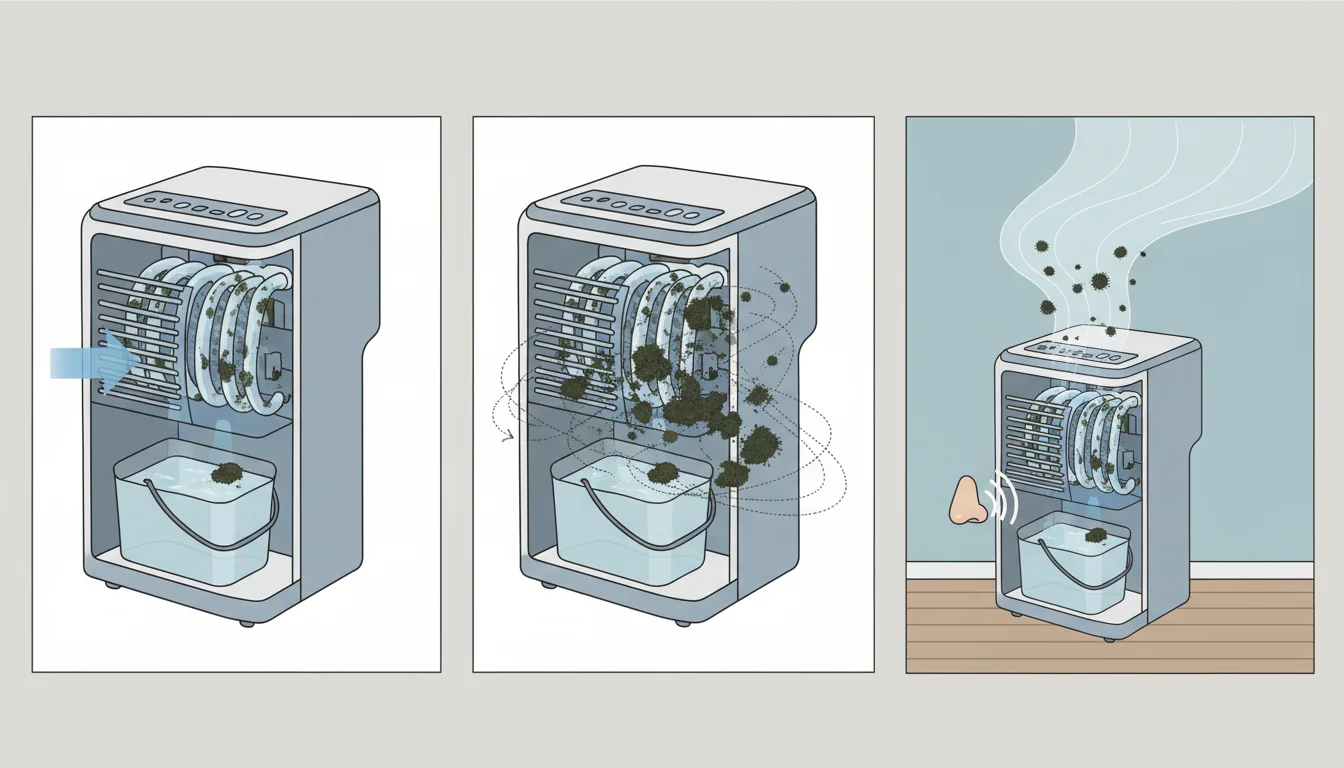
The musty odor comes from microbial gases released by active mold colonies growing on wet surfaces inside your unit. These colonies establish themselves wherever moisture and organic matter combine.
| Cause | Why It Happens | How Fast Mold Grows |
|---|---|---|
| Stagnant water in basin | Standing water becomes a breeding ground for mold and bacteria | 24-48 hours |
| Dirty air filter | Trapped dust and organic particles decompose and feed mold | 1-2 weeks |
| Contaminated evaporator coils | Moisture and dust create ideal growing conditions | 2-4 weeks |
| Infrequent emptying | Extended water contact allows colonies to mature | 3-7 days |
| High humidity environment | Excess moisture accelerates growth on all internal components | Continuous |
The mildew smell intensifies the longer these conditions persist. Your unit draws in humid air constantly, depositing moisture on coils and collecting it in the tank. Without regular intervention, you're essentially running a mold factory.
Health Risks of a Moldy Dehumidifier
A contaminated dehumidifier circulates mold spores directly into your breathing air, triggering allergic reactions and respiratory symptoms in sensitive individuals. The health risks extend beyond temporary discomfort.
- Allergy symptoms: Sneezing, runny nose, itchy eyes, and skin irritation from airborne spores
- Respiratory issues: Coughing, wheezing, and shortness of breath, especially in asthmatics
- Immune system stress: People with weakened immunity face increased infection risk
- Bacterial exposure: Stagnant tank water harbors harmful bacteria alongside mold
- Cumulative effects: Prolonged exposure worsens symptoms even in healthy adults
A dehumidifier that isn't thoroughly cleaned breeds harmful mold spores, which is particularly problematic for people with allergies according to Consumer Reports. The irony stings—your air quality improvement device becomes an air quality threat.
How to Clean a Moldy Dehumidifier: Step-by-Step
Start by unplugging the unit and moving it to a well-ventilated area like a garage or outdoor space to minimize mold spore exposure during cleaning. The entire process takes 30 minutes to an hour depending on contamination severity.
Safety preparation:
- Unplug from the electrical outlet completely
- Wear protective gloves for significant mold contamination
- Work in open air or near open windows
Water basin cleaning:
- Remove and empty the tank completely
- Fill with warm, soapy water using mild detergent
- Scrub the interior with a soft-bristled brush, focusing on corners
- Rinse thoroughly with clean water
- Prepare a disinfecting solution: one part white vinegar to four parts water
- Fill the tank with the solution and let it sit for 10-15 minutes
- For stubborn mold, use equal parts vinegar and water and let it sit for one hour
- Rinse multiple times to remove all vinegar residue
Evaporator coil cleaning:
- Locate the coils using your user manual
- Vacuum with a soft brush attachment to remove dust
- Mix 5 drops of dish soap per 32 ounces of water
- Spray the solution onto the coils and let it soak for 10 minutes
- Gently scrub with a soft cloth without bending the fins
- Rinse with clean water
- Dry completely using compressed air or a fan
Final steps:
- Clean or replace the air filter per manufacturer instructions
- Wipe all exterior surfaces with diluted vinegar solution
- Allow every component to dry completely before reassembly
The Wisconsin Department of Health Services recommends running a dehumidifier during and after cleanup to keep areas dry and prevent mold from recurring. Skipping the drying step virtually guarantees you'll repeat this process within weeks.
DIY Cleaning Solutions vs Commercial Products
White vinegar kills most mold and mildew types when applied undiluted and left to sit for one hour before wiping clean. Your choice between DIY and commercial options depends on mold severity and personal sensitivity to chemicals.
| Solution | Cost | Effectiveness | Best Use Case | Safety |
|---|---|---|---|---|
| White vinegar | $2-5 | Mild to moderate mold | Weekly maintenance | Non-toxic, safe for frequent use |
| Hydrogen peroxide | $3-8 | Moderate to stubborn mold | Monthly deep cleaning | Breaks down to water and oxygen |
| Baking soda | $1-3 | Odor absorption, light scrubbing | Between cleanings | Safe for all materials |
| Commercial coil cleaner | $15-40 | Severe infestations | Emergency situations | Requires ventilation, gloves |
For filter cleaning and regular maintenance, natural solutions win on cost and safety. Commercial products work faster on severe contamination but introduce chemical fumes that defeat the purpose of improving air quality.
After testing both approaches, the verdict is clear: vinegar plus baking soda handles 90% of situations. Save commercial cleaners for rentals or units neglected for months. Coil cleaner residue needs thorough rinsing, or you'll smell chemicals instead of mold.
Maintenance Schedule to Prevent Mold Growth
Empty the water basin daily during high-humidity conditions to eliminate the standing water where mold colonies establish themselves. Consistent maintenance prevents mold problems from returning.
Daily tasks:
- Empty the water collection basin
- Check for unusual odors
- Verify the unit runs smoothly
Weekly tasks:
- Wipe the basin interior with mild cleaner
- Inspect filter condition visually
- Check the drain hose for clogs if applicable
Monthly tasks:
- Deep clean the basin with vinegar solution
- Vacuum evaporator coils with a brush attachment
- Inspect all seals and gaskets
Quarterly tasks:
- Perform thorough coil cleaning with soap solution
- Replace the filter if the manufacturer recommends
- Check unit efficiency and noise levels
Seasonal considerations: Summer months demand more frequent maintenance. Humidity levels spike, your unit works harder, and mold grows faster. Run your dehumidifier continuously rather than intermittently. Constant operation keeps internal components drier than cycling on and off.
Fair warning: skipping even two weeks of basin emptying during humid weather creates visible slime. Many homeowners learn this the hard way after a vacation. The smell hits you at the door.
When to Repair or Replace Your Dehumidifier
Persistent musty odor after thorough cleaning signals mold embedded in unreachable internal components that require professional assessment or unit replacement. Age and efficiency matter in this decision.
| Situation | Recommendation | Typical Cost |
|---|---|---|
| Odor persists after deep cleaning | Professional cleaning service | $75-150 |
| Visible mold in sealed components | Professional assessment | $50-100 inspection |
| Unit over 5 years old with issues | Consider replacement | $150-400 new unit |
| Noticeable efficiency decrease | Repair evaluation first | Varies by problem |
| Repeated mold despite maintenance | Replace with newer model | $200-500 |
The repair vs replace calculation favors replacement for units approaching 7 years. Newer dehumidifiers run more efficiently, feature antimicrobial coatings, and cost less to operate. Professional cleaning makes sense for expensive units under 3 years old with localized contamination.
The bottom line: if you're fighting the same mold battle monthly despite proper maintenance, your unit likely has a design flaw or hidden damage. Cut your losses and invest in a replacement.
FAQ
How often should I empty my dehumidifier to prevent mold?
Empty the collection basin daily during humid conditions and at minimum every 2-3 days during moderate humidity. Standing water becomes a mold breeding ground within 24-48 hours.
Does vinegar kill mold in dehumidifiers?
Undiluted white vinegar kills most mold and mildew types according to Intellipure. Saturate the affected area, let it sit for one hour, then wipe clean and rinse thoroughly.
Why does my dehumidifier smell even after cleaning?
Mold embedded in evaporator coils, internal fans, or sealed components causes persistent odor. The smell comes from microbial gases released by active colonies in areas you didn't reach during cleaning.
Can a moldy dehumidifier make you sick?
Yes. Mold spores circulated into your breathing air trigger allergies, respiratory symptoms, and can worsen asthma. People with weakened immune systems face additional infection risks from bacterial growth in stagnant water.
Should I use bleach to clean my dehumidifier?
Bleach works but is often too harsh for regular maintenance according to BaseAire. Diluted vinegar provides equally effective disinfection without the chemical fumes and material damage risk.
How do I know if my dehumidifier has mold inside?
Signs include musty odor during operation, visible slime or discoloration in the tank, reduced water collection efficiency, and increased allergy symptoms when the unit runs. Inspect the basin, filter, and visible coils monthly.
Can I run my dehumidifier with a little mold?
Running a contaminated unit circulates mold spores throughout your space, worsening air quality instead of improving it. Clean the unit before resuming operation. A dehumidifier does not kill mold spores or remove existing colonies according to FDP Mold Remediation.
What humidity level prevents mold in dehumidifiers?
Maintain indoor humidity between 30-50% for optimal mold prevention. Lower humidity reduces moisture accumulation inside the unit, slowing mold growth on internal components between cleanings.
Share this post
Related Articles
Would a Dehumidifier Help With Asthma? What Science Says in 2026
Would a Dehumidifier Help With Asthma? What Science Says in 2026
Best Dehumidifier for RV: Complete Buyer's Guide for 2026
Best Dehumidifier for RV: Complete Buyer's Guide for 2026
Will a Dehumidifier Get Rid of Silverfish? Complete Guide to Humidity-Based Pest Control
Will a Dehumidifier Get Rid of Silverfish? Complete Guide to Humidity-Based Pest Control