How to Use a Dehumidifier to Dry Out Your Car: Complete 2026 Guide
How to Use a Dehumidifier to Dry Out Your Car: Complete 2026 Guide
A dehumidifier to dry out car interiors works by drawing in humid air, condensing the moisture, and releasing dry air back into the cabin. Mold growth begins within 24-48 hours of water exposure, making quick action essential. This guide covers dehumidifier types, placement strategies, drying timelines, and cost considerations for effective moisture removal.
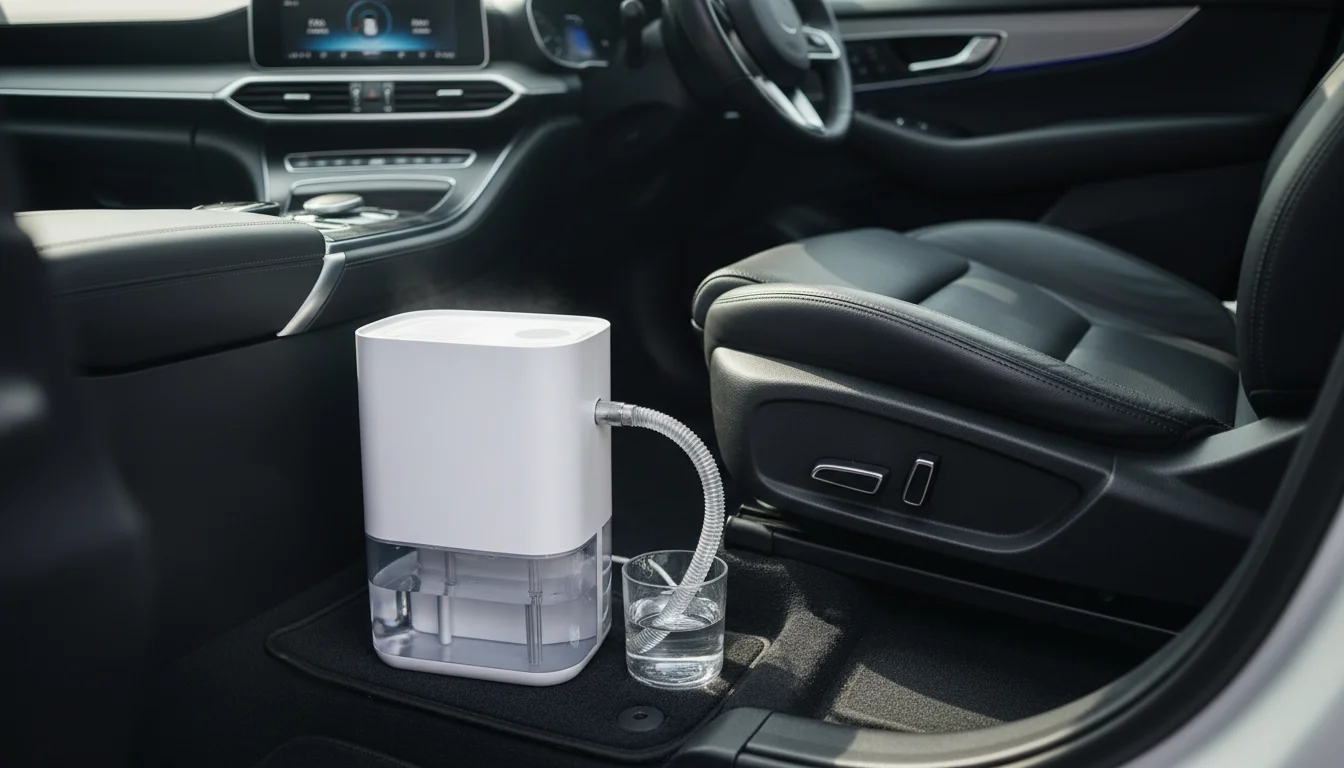
Why Use a Dehumidifier to Dry Your Car Interior
Active moisture extraction outperforms passive drying methods by continuously pulling water vapor from the air rather than waiting for natural evaporation. This matters because the padding beneath car carpets and sound-deadening materials traps moisture where surface-level drying cannot reach.
Key benefits of using a car dehumidifier:
- Prevents mold and mildew that starts forming within 24-48 hours of moisture exposure
- Protects sensitive electronics like dashboard systems and sensors from corrosion damage
- Eliminates musty odors before they become permanent
- Reduces window fogging caused by condensation
- Works continuously around the clock without supervision
- Removes moisture from hard-to-reach areas that towels miss
Removing moisture from car interiors becomes critical in humid climates where ambient air already contains high water vapor levels. Passive methods like opening windows actually work against you when outdoor humidity exceeds 60%. A dehumidifier creates a controlled drying environment that accelerates evaporation regardless of outside conditions.
The difference shows in the results. Drying a wet car interior with a dehumidifier takes 24-48 hours compared to 3-5 days with passive methods alone. For leather seats, this speed matters because prolonged humidity causes cracking and rigidity that becomes permanent.
Types of Dehumidifiers for Cars: Which One to Choose
Your choice depends on the severity of water damage, access to power, and budget. Desiccant options handle prevention and minor moisture, while electric units tackle serious flooding situations.
| Type | Capacity | Power Source | Cost | Best For |
|---|---|---|---|---|
| Desiccant bags (Zarpax, Eva-Dry) | 200-500ml | None (rechargeable) | $10-30 | Prevention, minor condensation |
| Mini USB dehumidifiers | 250-500ml/day | USB port | $25-50 | Ongoing moisture control |
| Portable electric | 1-2 liters/day | 110V outlet | $80-200 | Moderate water damage |
| Commercial-grade rental | 10+ liters/day | 110V outlet | $30-50/day | Severe flooding |
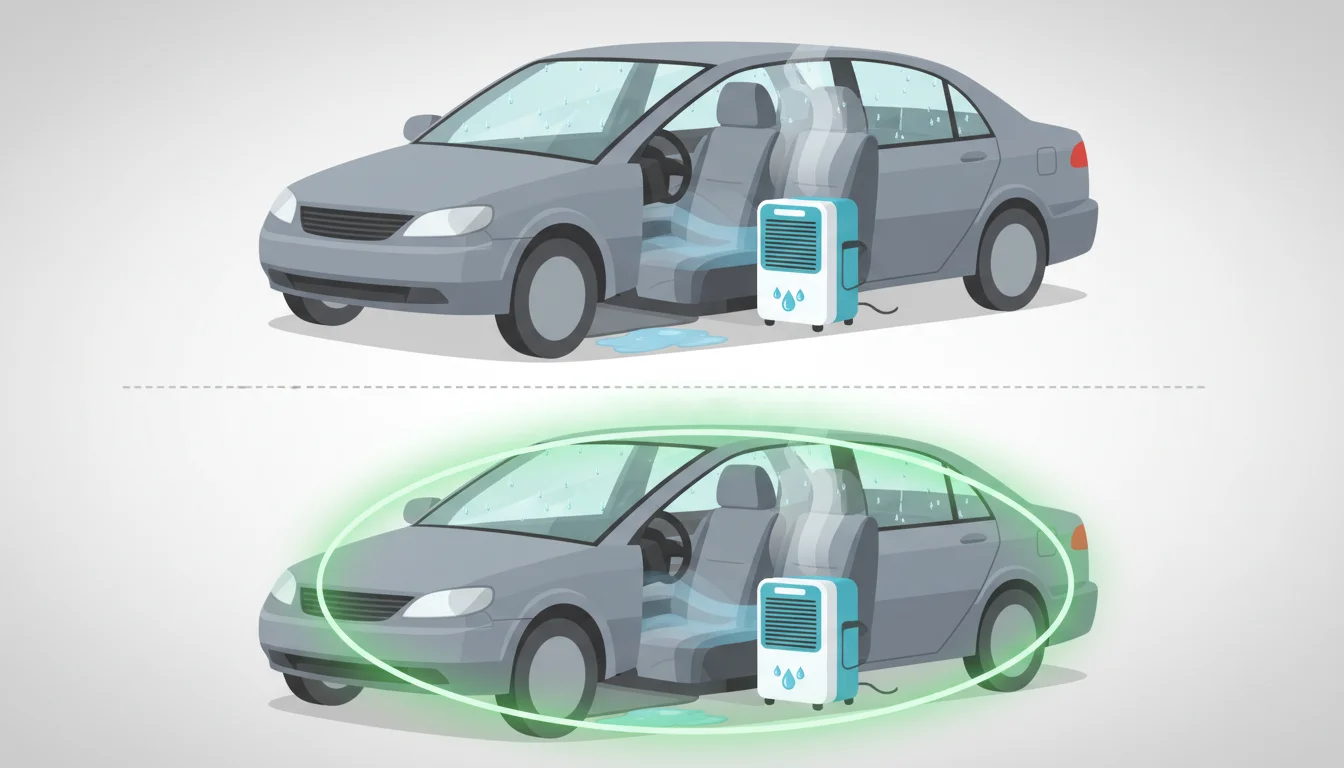
A portable dehumidifier car setup works best for active drying situations. The best dehumidifier for car use combines adequate capacity with a compact footprint that fits between seats.
Desiccant dehumidifier car options use silica gel or calcium chloride crystals that absorb moisture passively. These rechargeable units work indefinitely—simply microwave them when saturated to release absorbed water and restore absorption capacity. Keep one in your car year-round for prevention.
Rent commercial-grade equipment when flooding reaches seat cushion level. The $30-50 daily rental cost pays for itself by preventing thousands in mold remediation expenses. Most equipment rental stores carry units suitable for vehicle drying.
Step-by-Step Guide: How to Dry Out Your Car with a Dehumidifier
The best way to dry out car interiors combines immediate water removal with strategic dehumidifier placement in a sealed environment.
Step 1: Remove standing water first
Grab towels and blot every visible puddle. Then use a wet-dry vacuum on carpets, seats, and floor wells. This step removes up to 80% of water and makes your dehumidifier dramatically more effective. Go over each area multiple times.
Step 2: Take out removable items
Pull floor mats, seat covers, and trunk liners. Lay them in sunlight or a ventilated garage to dry separately. These items trap moisture underneath and slow the overall process if left in place.
Step 3: Position the dehumidifier strategically
Car dehumidifier placement affects results significantly. Place electric units in the center console area or on the most saturated floor section. For smaller desiccant units, position them on the dashboard and rear shelf to cover the full cabin.
Step 4: Seal the environment
Close all windows and doors completely. A sealed cabin allows the dehumidifier to work efficiently without fighting incoming humid air. This step transforms your car into a controlled drying chamber.
Step 5: Run for 24-48 hours
Let the unit operate continuously. Check the water reservoir every 6-8 hours and empty it to maintain performance. Electric units stop working when their tanks fill.
Step 6: Verify dryness
Feel carpets and seat cushions. Check for foggy windows in the morning. Use a moisture meter if available—readings below 15% indicate safe dryness levels. Repeat the process if dampness persists.
Pro tip for electric units: Run an extension cord through a window cracked open just enough for the cord. Use outdoor-rated cords and position them to avoid pinching. This maintains the sealed environment while providing power. NAPA Know How Blog recommends running the dehumidifier inside your garage with the car for optimal results.
Expected Timeline: How Long to Dry a Wet Car Interior
Drying time depends on water volume, ambient humidity, and dehumidifier capacity. Most situations resolve within 48 hours with proper equipment and technique.
| Scenario | Dehumidifier Runtime | Notes |
|---|---|---|
| Rain through cracked window | 12-24 hours | Minor moisture, fast resolution |
| Heavy rain through open window | 24-48 hours | Saturated seat and carpet |
| Flooded floor wells | 48-72 hours | Check seat cushion undersides |
| Flooding above seat level | 3-7 days | Consider professional help |
How long to dry car interior varies with temperature. Heat accelerates evaporation while cold slows it. Run your car heater with AC engaged for 15 minutes before starting the dehumidifier to warm surfaces and boost initial moisture release.
Signs your car is fully dry include:
- No foggy windows in morning hours
- Zero musty smell when entering
- Carpet feels completely dry 2 inches deep
- Moisture meter reads below 15%
- No dampness on tissue paper pressed into cushions
Removing moisture from car interiors takes patience. I learned this the hard way when rushing the process left hidden moisture in my trunk liner. Two weeks later, the mold smell appeared. Test thoroughly before declaring victory.
Cost Analysis: Buying vs Renting a Dehumidifier
The math favors purchasing for anyone living in humid climates or flood-prone areas. A $100 portable unit pays for itself after three uses compared to rental costs.
| Option | Upfront Cost | Ongoing Cost | Break-Even Point |
|---|---|---|---|
| Desiccant bags | $10-30 | None (rechargeable) | Immediate |
| Mini USB dehumidifier | $30-80 | Electricity (~$0.02/day) | 1-2 uses vs doing nothing |
| Portable electric | $100-250 | Electricity (~$0.50/day) | 3-5 days vs rental |
| Commercial rental | $30-50/day | Per-day rate | Never |
A portable dehumidifier car purchase makes sense for ongoing moisture control. Look for units with auto-shutoff, removable tanks, and compact profiles. Car dehumidifier reviews consistently favor the Eva-Dry E-333 and Zarpax LV-A300 for desiccant options under $30.
Rent a dehumidifier for car drying only when facing severe flooding that exceeds your unit's capacity. Commercial units extract 10+ liters daily compared to 1-2 liters from consumer models. The rental cost beats waiting five times longer with inadequate equipment.
Consider your local climate. Phoenix residents face this problem rarely. Seattle and Miami residents encounter moisture situations monthly. Budget accordingly.
Complementary Methods and Safety Tips
Combine dehumidification with active airflow for the fastest results. A dehumidifier alone works, but adding fans cuts drying time by 30-40%.
Methods to speed up drying:
- Position a box fan to blow across damp surfaces
- Run car heater with AC for 15-minute intervals
- Sprinkle baking soda on carpets to absorb odors and moisture
- Place cat litter in mesh bags as supplementary absorbers
- Park in direct sunlight with windows cracked 1 inch when weather allows
Safety considerations:
- Never use gas-powered equipment in enclosed spaces
- Check extension cord ratings before use
- Avoid running electrical equipment unattended overnight without smoke detectors nearby
- Ensure cords enter through windows at the top, not bottom, to prevent water pooling
- Test GFCI outlets before connecting equipment
The best way to dry out car interiors combines multiple approaches. Dehumidifiers handle air moisture while fans accelerate surface evaporation. Baking soda tackles odors that water leaves behind. This multi-pronged approach prevents the lingering dampness that causes mold weeks later.
Fair warning: I once skipped the baking soda step and regretted it. The musty smell returned even after thorough drying. Now I always leave a box open overnight as the final step.
FAQ
Can I use a regular household dehumidifier in my car?
Yes, if it fits through the door opening and you have access to power. Position it on the floor or a stable surface. Empty the tank frequently since car interiors contain more moisture per cubic foot than typical rooms.
How do I know if my car has hidden water damage?
Check under seats by feeling the carpet padding. Inspect trunk compartments and spare tire wells. Smell for mustiness during morning hours when odors concentrate. Foggy windows that persist after heating indicate trapped moisture.
Will a dehumidifier remove mold that has already started growing?
Dehumidifiers prevent mold by removing moisture but cannot kill existing mold. If you see visible mold growth, treat surfaces with appropriate cleaners first. Then use the dehumidifier to prevent recurrence. Extensive mold requires professional remediation.
Can I drive my car while using a desiccant dehumidifier?
Absolutely. Desiccant bags and rechargeable units work continuously during normal driving. Secure them on the dashboard or rear shelf. This provides ongoing moisture control in humid climates and prevents condensation buildup.
What humidity level should I target inside my car?
Keep interior humidity between 30-50% for optimal protection. Below 30% can dry out leather. Above 50% encourages mold growth. Inexpensive hygrometers cost under $10 and help you monitor conditions during and after drying.
Should I remove my car seats to dry flooding underneath?
For severe flooding that reaches seat mounting points, removing seats exposes hidden moisture reservoirs. This requires basic tools and 30-60 minutes per seat. The effort prevents mold growth in areas you cannot otherwise access or inspect.
How often should I recharge a desiccant dehumidifier?
Most units indicate saturation through color changes or weight increase. Typical recharge intervals range from 2-4 weeks depending on humidity levels. Microwave according to manufacturer instructions until the indicator resets. The process takes 3-5 minutes.
Share this post
Related Articles
Would a Dehumidifier Help With Asthma? What Science Says in 2026
Would a Dehumidifier Help With Asthma? What Science Says in 2026
Best Dehumidifier for RV: Complete Buyer's Guide for 2026
Best Dehumidifier for RV: Complete Buyer's Guide for 2026
Will a Dehumidifier Get Rid of Silverfish? Complete Guide to Humidity-Based Pest Control
Will a Dehumidifier Get Rid of Silverfish? Complete Guide to Humidity-Based Pest Control