Dehumidifier vs Humidifier for Mold: Which One Actually Prevents Growth?
Dehumidifier vs Humidifier for Mold: Which One Actually Prevents Growth?
Mold requires moisture to grow, making humidity control the single most effective prevention strategy. The EPA recommends keeping indoor humidity between 30-50% to stop mold before it starts. This guide covers the critical differences between dehumidifiers and humidifiers, optimal humidity levels, and room-specific strategies to keep your home mold-free.
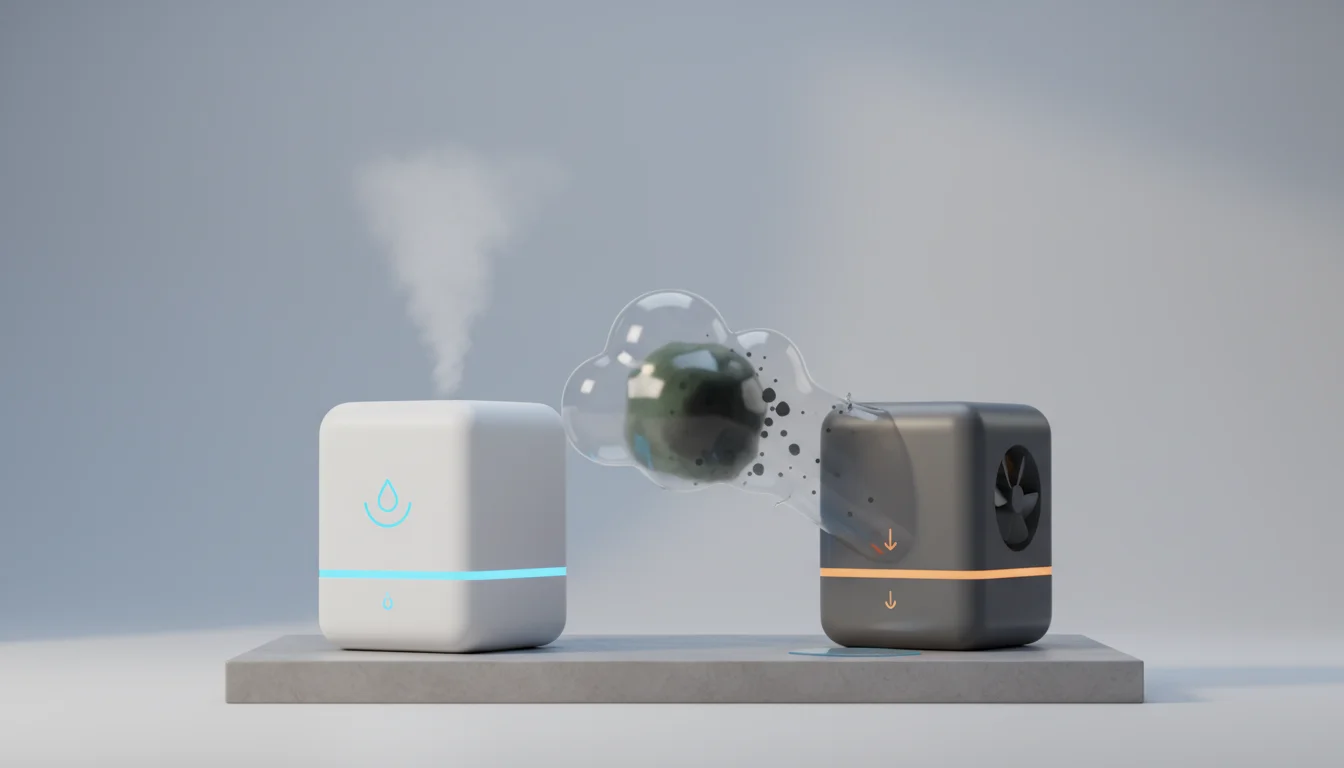
What Causes Mold Growth in Your Home
Mold spores exist in virtually every home, but they only colonize when moisture levels rise above safe thresholds. The critical trigger is sustained humidity above 60%, which creates the wet surfaces mold needs to establish colonies and spread.
| Factor | Safe Level | Danger Zone | What Happens |
|---|---|---|---|
| Relative Humidity | 30-50% | Above 60% | Mold colonies form within 24-48 hours |
| Temperature | Below 77°F | 77-86°F | Growth rate accelerates dramatically |
| Ventilation | Good airflow | Stagnant air | Moisture pockets develop on surfaces |
| Surface Moisture | Dry | Condensation present | Spores attach and begin growing |
Bathrooms, basements, kitchens, and crawl spaces top the list of problem areas. These spaces accumulate moisture from daily activities like showering, cooking, and laundry. Poor ventilation traps that moisture against walls, ceilings, and floors.
Visible mold signals a moisture problem that already exists. The Minnesota Department of Health states it clearly: "Controlling moisture in your home is the best way to prevent mold problems." Fixing water leaks and reducing humidity addresses the root cause rather than treating symptoms.
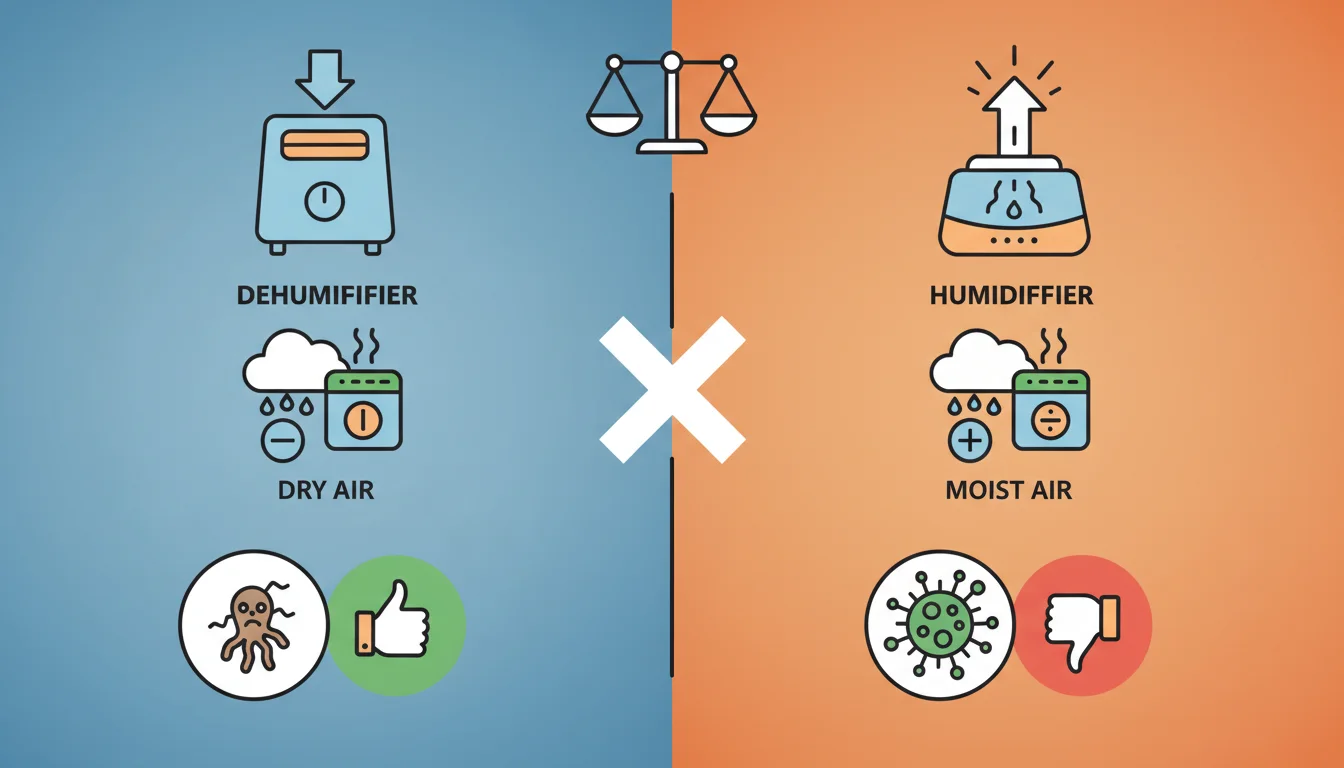
Optimal Humidity Levels for Mold Prevention
The EPA sets the target at 30-50% relative humidity for mold prevention. This range keeps mold dormant while maintaining comfort for occupants.
- Below 30%: Causes dry skin, irritated nasal passages, and respiratory discomfort
- 30-50%: The safe zone where mold growth is effectively inhibited
- 50-60%: Risk increases as conditions become favorable for spores
- Above 60%: Condensation forms on surfaces, and mold growth becomes likely within 24-48 hours
A hygrometer costs $10-50 at hardware stores and provides real-time humidity readings for any room. Place one in your basement, bathroom, and main living area. Check readings at different times of day since humidity fluctuates with temperature and activity.
Seasonal patterns matter for humidity control. Winter heating dries indoor air below 30%, sometimes requiring a humidifier. Summer humidity often climbs above 50%, making dehumidification necessary. The EPA recommends adjusting your approach based on current readings rather than assumptions about the season.
How Dehumidifiers Prevent Mold Growth
Dehumidifiers remove excess moisture from the air by drawing it over cold coils, condensing water vapor, and collecting it in a tank or drain line. This directly eliminates mold's primary growth requirement.
| Room Size | Recommended Capacity | Expected Results |
|---|---|---|
| Small (up to 300 sq ft) | 20-30 pints/day | Reduces humidity within 12-24 hours |
| Medium (300-700 sq ft) | 30-50 pints/day | Maintains 40-50% in bathrooms and bedrooms |
| Large basement (700+ sq ft) | 50-70 pints/day | Handles high moisture loads from concrete |
| Whole-house | 70+ pints/day | Integrated with HVAC for consistent control |
Running a dehumidifier consistently produces measurable results within 24-48 hours. Basements with chronic dampness often drop from 70% humidity to 45% within the first day of operation. The key is continuous operation during humid periods rather than intermittent use.
Claims that dehumidifiers prevent mold are backed by straightforward physics. Mold needs moisture above 60% to grow. Remove that moisture, and spores remain dormant. A dehumidifier addresses the root cause, while air fresheners, sprays, and surface cleaners only treat symptoms.
Why Humidifiers Can Worsen Mold Problems
Humidifiers add moisture to the air, which pushes humidity above safe levels when used carelessly. The same mechanism that relieves dry winter air creates ideal mold conditions when humidity exceeds 60%.
- Over-humidification risk: Without monitoring, humidity climbs undetected into danger zones
- Device contamination: Mold and bacteria grow inside humidifier tanks within days without cleaning
- Aerosolized spores: Dirty humidifiers spray mold particles directly into breathable air
- Surface condensation: Excess moisture settles on walls, windows, and carpets
Dr. Robin Deterding at Children's Hospital Colorado documented a patient who developed chronic lung disease symptoms traced back to humidifier use. The contaminated device was spraying mold spores at a particle size small enough to reach deep lung tissue.
Humidifiers belong in one scenario only: dry winter conditions where humidity drops below 30%. Using one in an already damp space or without regular cleaning invites mold problems. Children's Hospital Colorado recommends weekly cleaning with distilled white vinegar and using distilled water exclusively. Fair warning: most people don't maintain this schedule, and their humidifiers become mold farms.
Dehumidifier vs Air Purifier: Which Is Better for Mold?
Dehumidifiers prevent mold by eliminating moisture. Air purifiers capture airborne spores but do nothing about the humidity that allows mold to grow in the first place.
| Feature | Dehumidifier | Air Purifier with HEPA |
|---|---|---|
| Addresses moisture | Yes, removes water from air | No effect on humidity |
| Captures mold spores | No | Yes, traps particles 0.3 microns and larger |
| Prevents new growth | Yes, eliminates growth conditions | No, spores still colonize wet surfaces |
| Best use case | Active mold prevention | Post-remediation air quality |
| Energy consumption | 300-700 watts | 30-100 watts |
If you must choose one device for mold prevention, pick the dehumidifier. It stops mold at the source. Air purifiers work as a second line of defense, removing spores that are already airborne. For comprehensive protection, run both.
The dehumidifier vs air purifier debate has a clear winner when it comes to prevention. After professional mold remediation, an air purifier helps clear remaining spores from the air. During active prevention, the dehumidifier does the heavy lifting. No amount of air filtration prevents mold from growing on a damp basement wall.
Room-by-Room Mold Prevention Strategy
Different rooms face different moisture challenges. A one-size-fits-all approach misses the specific risks in each space.
- Basement: Run a dehumidifier year-round targeting 40-50% humidity. Concrete absorbs ground moisture and releases it continuously.
- Bathroom: Use exhaust fans during showers and for 30 minutes after. Windowless bathrooms benefit from a portable dehumidifier.
- Kitchen: Range hood ventilation removes cooking steam. Dehumidifiers help in humid climates where outdoor air adds moisture.
- Bedroom: Monitor with a hygrometer. Use a humidifier only during winter when readings drop below 30%.
- Laundry room: Vent the dryer outside, never into the house. A dedicated dehumidifier handles residual moisture.
- Crawl space: Install vapor barriers over bare earth. Add dehumidification to prevent structural damage from hidden mold.
Here's something worth noting about basements: concrete never truly dries. Even finished basements release moisture through the slab. A properly sized dehumidifier running continuously costs about $10-15 per month in electricity. That's cheap insurance against mold damage that costs thousands to remediate.
Complete Mold Prevention: Combining Solutions
Moisture control works best as a layered system rather than a single solution. Each element addresses a different entry point for water and humidity.
- Fix leaks immediately: Plumbing drips and roof leaks introduce moisture directly. Mold starts growing within 24-48 hours on wet materials.
- Improve ventilation: Exhaust fans in bathrooms and kitchens remove moisture at the source.
- Run dehumidifiers strategically: Focus on basements, crawl spaces, and rooms with chronic humidity above 50%.
- Maintain HVAC systems: Dirty filters and clogged condensate lines create moisture problems.
- Use mold-resistant materials: For renovations, choose paperless drywall and mold-resistant paint in high-moisture areas.
- Monitor continuously: Hygrometers in problem areas catch rising humidity before mold establishes.
The EPA emphasizes that cleanup without fixing the water source guarantees recurrence. This lesson often comes the hard way: treating visible mold without addressing basement humidity means it comes back within months. Fix the moisture first.
FAQ
Does running a dehumidifier 24/7 prevent mold?
Continuous operation in high-moisture areas like basements effectively prevents mold growth. Set the target humidity to 45-50% and let the unit cycle automatically. Modern dehumidifiers include humidistats that turn the compressor on and off as needed.
What humidity level kills existing mold?
Mold doesn't die from low humidity alone. It goes dormant below 60% but survives in a dried state for years. Existing mold requires physical removal and cleaning. Dehumidification prevents new growth but doesn't eliminate established colonies.
Are whole-house dehumidifiers worth the investment?
Whole-house units cost $1,500-2,500 installed but handle larger volumes more efficiently than portable units. They integrate with existing HVAC ductwork and require less maintenance. For homes with chronic humidity issues in multiple rooms, the investment pays off in convenience and effectiveness.
How often should I clean my humidifier to prevent mold inside it?
Clean weekly at minimum. Fill the tank with distilled white vinegar, let it sit for 20 minutes, scrub crevices with a toothbrush, rinse thoroughly, and air dry. Use distilled water for operation to prevent mineral and bacterial buildup.
Does opening windows help with mold prevention?
Opening windows helps only when outdoor humidity is lower than indoor humidity. In humid summer weather, it makes the problem worse. Check outdoor humidity readings before using natural ventilation as a moisture control strategy.
Should I run a dehumidifier in winter?
Winter heating often drops indoor humidity below 30%, making dehumidification unnecessary and counterproductive. Monitor with a hygrometer. Basements with concrete walls remain exceptions because ground moisture continues releasing through the slab regardless of season.
What size dehumidifier do I need for a 1,000 square foot basement?
A 50-70 pint capacity unit handles 1,000 square feet with moderate dampness. For severe moisture problems with visible condensation or musty odors, choose a 70+ pint model. Undersized units run continuously without reaching target humidity levels.
Share this post
Related Articles
Would a Dehumidifier Help With Asthma? What Science Says in 2026
Would a Dehumidifier Help With Asthma? What Science Says in 2026
Best Dehumidifier for RV: Complete Buyer's Guide for 2026
Best Dehumidifier for RV: Complete Buyer's Guide for 2026
Will a Dehumidifier Get Rid of Silverfish? Complete Guide to Humidity-Based Pest Control
Will a Dehumidifier Get Rid of Silverfish? Complete Guide to Humidity-Based Pest Control