Dehumidifier Without Electricity: Complete Guide to Non-Electric Moisture Control in 2026
Dehumidifier Without Electricity: Complete Guide to Non-Electric Moisture Control in 2026
A dehumidifier without electricity uses hygroscopic materials like silica gel or calcium chloride to passively absorb moisture from the air. These devices remove 6-12 ounces of water per month in small spaces, compared to 20-70 pints daily from electric units. This guide covers how passive dehumidifiers work, the best products for 2026, and when they outperform powered alternatives.

How Non-Electric Dehumidifiers Work
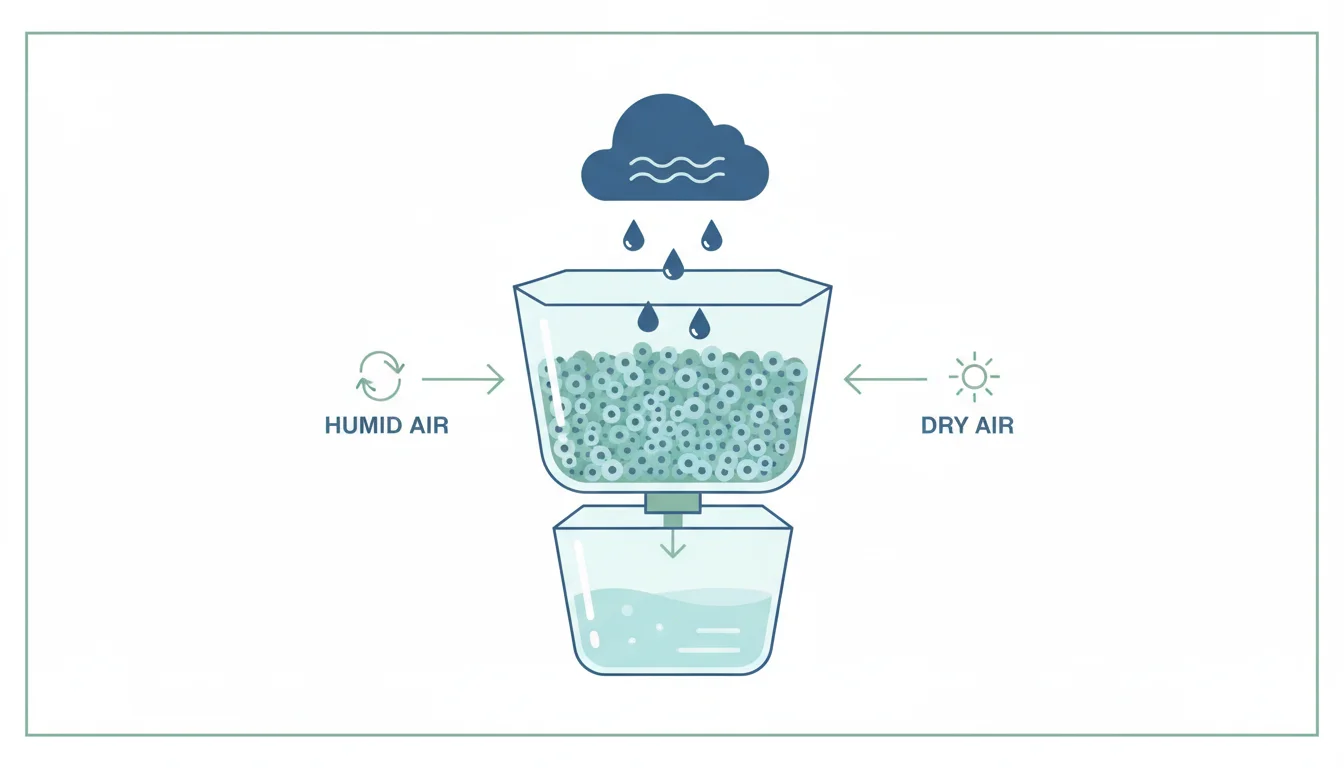
Passive dehumidifiers attract water molecules through chemical affinity rather than mechanical extraction. The desiccant material contains microscopic pores that trap humidity from surrounding air without fans, compressors, or any moving parts.
Silica gel works through van der Waals forces—weak electromagnetic interactions that pull water molecules into the material's porous structure. The process continues until the desiccant reaches saturation, at which point absorption stops entirely.
This natural equilibrium creates the primary limitation of non-electric options. A small silica gel packet has a fixed capacity determined by its mass. Once full, you must replace or regenerate the material.
| Feature | Non-Electric Dehumidifier | Electric Dehumidifier |
|---|---|---|
| Power Required | None | 300-700 watts |
| Noise Level | Silent | 40-55 decibels |
| Capacity | 6-12 oz/month | 20-70 pints/day |
| Best Coverage | Under 500 sq ft | 500-4,500 sq ft |
| Maintenance | Replace/recharge desiccant | Empty water tank |
| Upfront Cost | $5-40 | $178-419 |
The silence factor matters more than most people realize. I've slept with both types running, and the difference is stark. Electric units hum constantly. Passive absorbers make no noise whatsoever.
Types of Non-Electric Dehumidifiers
Five categories dominate the market, each with distinct absorption rates and ideal applications. Your choice depends on space size, budget, and whether you want disposable convenience or renewable long-term value.
Calcium Chloride Products
DampRid and UniBond lead this category. The crystals dissolve into liquid as they absorb moisture, providing a visible indicator of effectiveness. These offer the highest absorption rates among passive options, with most users reporting 4-6 weeks of use per container.
Silica Gel Dehumidifiers
Eva-Dry units represent this category's gold standard. The material changes color when saturated, then regenerates after 8-10 hours of heating. A single unit lasts years with proper care.
Activated Charcoal and Bamboo Charcoal
These eco-friendly options pull double duty by absorbing odors alongside moisture. Effectiveness ranks lower than calcium chloride, making them best for closets and drawers where smell control matters equally.
Clay-Based Desiccants
Natural and affordable, clay absorbers work for light-duty applications. Capacity limitations make them unsuitable for spaces with significant humidity problems.
| Type | Absorption Rate | Lifespan | Best Application | Renewable |
|---|---|---|---|---|
| Calcium Chloride | High | 4-6 weeks | Basements, large closets | No (refillable) |
| Silica Gel | Medium-High | Years | Small enclosed spaces | Yes |
| Activated Charcoal | Medium | 1-2 months | Closets, drawers | Yes |
| Bamboo Charcoal | Medium | 1-2 years | Odor-prone areas | Yes |
| Clay-Based | Low | 2-4 weeks | Light humidity spaces | Sometimes |
For most people, silica gel units deliver the best long-term value. The upfront cost runs higher, but you'll spend less over two years than buying disposable calcium chloride refills, according to testing from [Yachting Monthly].
Best Use Cases and Applications
These devices excel in six specific scenarios where electric dehumidifiers fail, prove impractical, or cost too much to operate.
- Boats and marine storage: Prevents mold growth during winter layup without draining batteries or requiring shore power
- RVs and campers: Compact units fit in tight spaces and work during dry camping when generator use is limited
- Gun safes and closets: Protects firearms and valuables in enclosed spaces too small for electric units
- Basements and garages: Supplements existing dehumidification or handles moderate dampness independently
- Off-grid cabins: Maintains livable conditions in remote locations without power infrastructure
- Bedrooms: Eliminates the 40-55 decibel hum that disrupts sleep
The gun safe application surprised me most during research. A single Eva-Dry E-333 unit keeps a 24-gun safe at safe humidity levels indefinitely, and the indicator window shows exactly when recharging is needed.
Boat owners rely heavily on passive absorbers because the alternative involves running generators or maintaining shore power year-round. The [Pro Breeze] comparison guide notes that most marina storage situations make electric dehumidification impractical.
Top Non-Electric Dehumidifier Products for 2026
Five products stand out for reliability, value, and user satisfaction across thousands of reviews and independent testing.
DampRid FG50T
The best disposable option available. Calcium chloride crystals in a spill-resistant container handle spaces up to 1,000 cubic feet. Expect 45-60 days of use depending on humidity levels, with prices running $5-15 per unit.
Eva-Dry E-333
The top rechargeable choice for small spaces. The color-changing indicator eliminates guesswork about saturation. Plug it into an outlet overnight to regenerate, then continue using indefinitely. The initial investment of $20-40 pays for itself within months.
Eva-Dry E-500
A larger capacity version for spaces up to 500 cubic feet. It uses the same renewable technology as the E-333 with extended coverage, making it worth the upgrade for walk-in closets or small bathrooms.
UniBond Aero 360
Europe's favorite non-electric option features a tablet-based refill system. The 0.9-liter collection tank and 3-month duration between refills make it practical for medium rooms. Its dimensions of 14cm x 23cm x 10cm fit most spaces easily.
Dry & Dry Silica Gel Canisters
Industrial-grade performance for serious applications. These canisters handle extreme moisture environments where consumer products struggle, with pricing that reflects the professional-level capacity.
| Product | Price Range | Duration | Coverage | Type |
|---|---|---|---|---|
| DampRid FG50T | $5-15 | 45-60 days | 1,000 cu ft | Disposable |
| Eva-Dry E-333 | $20-40 | Indefinite | 333 cu ft | Rechargeable |
| Eva-Dry E-500 | $25-50 | Indefinite | 500 cu ft | Rechargeable |
| UniBond Aero 360 | $15-30 | 3 months | Medium room | Refillable |
| Dry & Dry Canisters | $30-60 | Rechargeable | Industrial | Rechargeable |
The Eva-Dry E-333 wins for most home users. Testing from the [Dehumidifier Buyers Guide] confirms it delivers consistent performance across temperature ranges where calcium chloride products slow down.
DIY Non-Electric Dehumidifier Methods
Commercial products work well, but homemade alternatives cost a fraction of the price and use materials you likely already own. Four methods deliver measurable results.
Rock Salt Bucket Method
Fill a 5-gallon bucket with halite rock salt. Drill drainage holes in a second bucket, nest it inside the first, and add salt. Water drips through as the salt absorbs humidity. Replace the salt monthly for a total cost under $10—enough materials to last a full season.
Baking Soda Containers
Open boxes of baking soda absorb light moisture in small spaces. Effectiveness ranks lowest among DIY options, making this method best for refrigerators, cars, or tiny closets. Replace every 30 days.
Collected Silica Gel Packets
Those packets in shoe boxes and electronics packaging work identically to commercial silica gel products. Collect 20-30 packets, place them in a breathable container, and position in problem areas. Recharge in an oven at 250°F for 2 hours when saturated.
Charcoal Briquette Method
Plain charcoal briquettes in a coffee can absorb moisture and odors simultaneously. Avoid briquettes with lighter fluid additives. Replace or reactivate monthly by spreading them in direct sunlight.
| Method | Effectiveness | Cost | Maintenance |
|---|---|---|---|
| Rock Salt | High | $5-10/season | Monthly replacement |
| Baking Soda | Low | $2-3/month | Monthly replacement |
| Silica Gel Packets | Medium | Free (collected) | Recharge as needed |
| Charcoal Briquettes | Medium | $5-8/month | Monthly replacement |
The rock salt method works remarkably well for basements. I watched a single bucket pull nearly a quart of water from the air over two weeks in a damp corner. Commercial products look more polished, but salt gets the job done.
Non-Electric vs Electric Dehumidifiers: Pros and Cons
The right choice depends entirely on your space size, humidity severity, and priorities around noise, cost, and environmental impact.
Non-Electric Advantages
- Zero energy consumption saves $50-150 annually in electricity
- Completely silent operation suits bedrooms and offices
- Portable without cord management concerns
- No mechanical parts to fail or maintain
- Works during power outages
Non-Electric Disadvantages
- Limited to spaces under 500 square feet
- Requires manual monitoring and replacement
- Cannot handle severe humidity problems
- Slower moisture removal than powered units
When to Choose Non-Electric Select passive dehumidifiers for enclosed spaces like closets, safes, and cabinets. They work well as supplements in moderately damp areas, and eco-conscious users appreciate the zero-energy footprint.
When Electric Works Better Whole-home humidity control demands electric units. Basements with active water intrusion, rooms over 500 square feet, or spaces requiring rapid moisture removal all need powered dehumidification.
Testing from EcoAir shows that passive absorbers achieve 10-15% relative humidity reduction in appropriate spaces, while electric units achieve 40-60% reduction under the same conditions.
FAQ
How long do non-electric dehumidifiers last before needing replacement?
Disposable calcium chloride products last 4-8 weeks depending on humidity levels. Rechargeable silica gel units like Eva-Dry work indefinitely with periodic regeneration. Refillable systems need new tablets or crystals every 1-3 months.
Do non-electric dehumidifiers work in cold temperatures?
Passive desiccants actually outperform compressor-based electric dehumidifiers in cold conditions. Silica gel and calcium chloride continue absorbing moisture below 65°F, where electric units struggle. This makes them ideal for unheated garages, boats, and seasonal cabins.
What size space can a non-electric dehumidifier handle?
Most passive units effectively cover 100-500 cubic feet, which translates to a large closet, small bathroom, or compact bedroom. Larger spaces require multiple units or supplemental electric dehumidification.
Are non-electric dehumidifiers safe around pets and children?
Silica gel products pose minimal risk if ingested in small quantities. Calcium chloride products require more caution, as the collected liquid irritates skin and eyes. Keep all dehumidifiers out of reach and choose spill-proof designs for homes with curious pets or young children.
How do I know when a passive dehumidifier needs replacing or recharging?
Eva-Dry units feature color-changing indicators that shift from orange to green when saturated. Calcium chloride products show visible crystal dissolution. Charcoal and baking soda require calendar-based replacement every 30-60 days regardless of visible changes.
Do non-electric dehumidifiers remove odors?
Activated charcoal and bamboo charcoal products absorb odors alongside moisture. Silica gel and calcium chloride target humidity exclusively. For spaces with both dampness and smell concerns, charcoal-based options or combination approaches work best.
How much money do non-electric dehumidifiers save compared to electric models?
Annual operating costs for electric dehumidifiers range from $50-150 in electricity. Non-electric options cost $20-60 yearly in replacement materials—or nothing for rechargeable units. The savings compound over years of use, though electric models remove vastly more moisture per dollar spent in high-humidity environments.
Share this post
Related Articles
Would a Dehumidifier Help With Asthma? What Science Says in 2026
Would a Dehumidifier Help With Asthma? What Science Says in 2026
Best Dehumidifier for RV: Complete Buyer's Guide for 2026
Best Dehumidifier for RV: Complete Buyer's Guide for 2026
Will a Dehumidifier Get Rid of Silverfish? Complete Guide to Humidity-Based Pest Control
Will a Dehumidifier Get Rid of Silverfish? Complete Guide to Humidity-Based Pest Control