Dehumidifier vs Air Purifier: Which One Do You Actually Need in 2026?
Dehumidifier vs Air Purifier: Which One Do You Actually Need in 2026?
A dehumidifier removes moisture from air while an air purifier filters out particles like dust and allergens. HEPA filters capture 99.97% of particles as small as 0.3 microns, while dehumidifiers target humidity levels between 30-50%. This guide breaks down exactly which device solves your specific air quality problem.
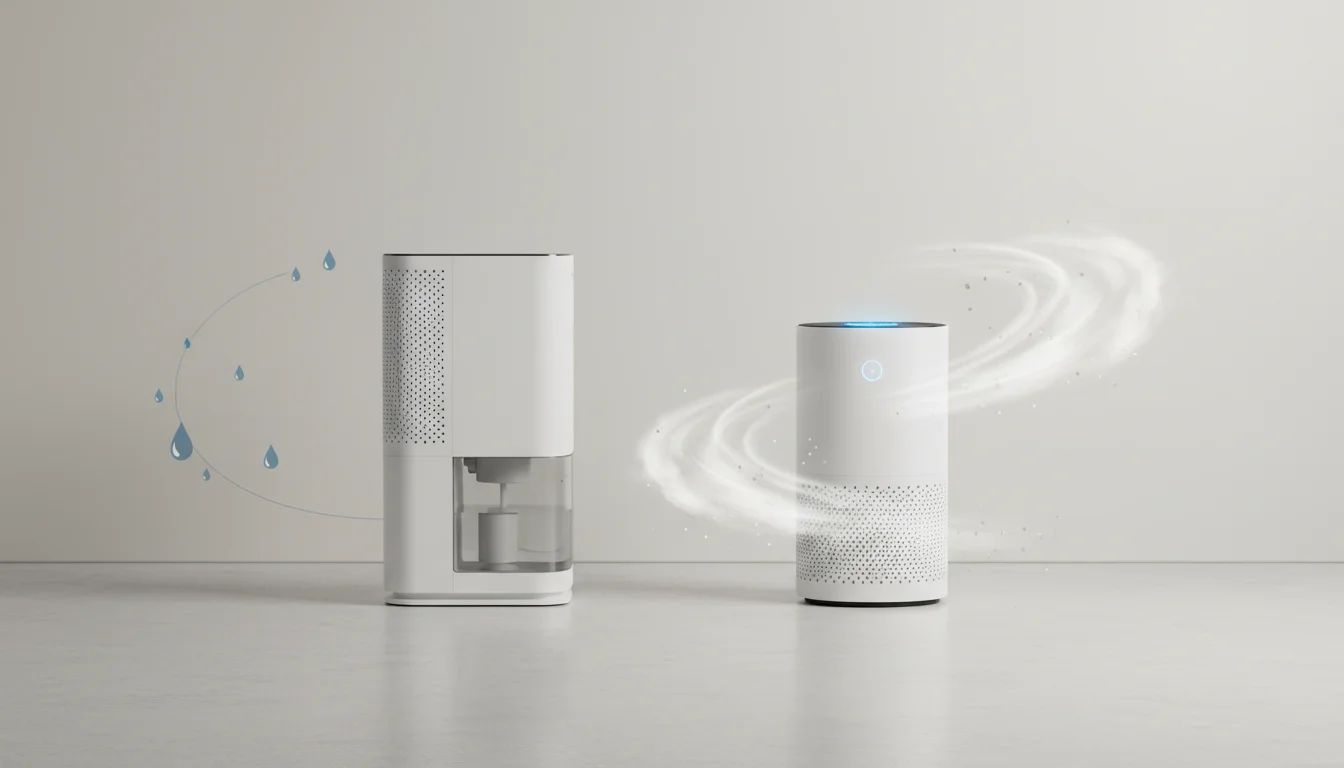
What Does a Dehumidifier Do?
A dehumidifier pulls warm, humid air over cold refrigerant coils where water vapor condenses into liquid that collects in a reservoir or drains away.
The dried air returns to your room slightly warmer than before. Your goal is maintaining indoor humidity between 30% and 50% for optimal health and home protection.
Primary dehumidifier benefits include:
- Preventing mold and mildew growth before it starts
- Eliminating musty, damp odors at the source
- Protecting wood furniture and flooring from moisture damage
- Discouraging pests like roaches and silverfish that thrive in dampness
Signs you need a dehumidifier:
- Persistent condensation forming on windows
- Musty or damp smell that won't go away
- Visible mold spots on walls or ceilings
- Peeling or bubbling wallpaper from moisture damage
Here's what surprised me when researching this: a dehumidifier does NOT filter particles from your air. No dust removal. No pollen capture. No pet dander reduction. Its only job is pulling water out of the air [Achoo Allergy].
If you're running a dehumidifier hoping it will help your allergies, you're solving the wrong problem.
What Does an Air Purifier Do?
An air purifier forces room air through a filtration system that captures microscopic particles suspended in the air you breathe.
HEPA filters represent the gold standard here. The U.S. Environmental Protection Agency confirms that true HEPA filters remove at least 99.97% of particles measuring 0.3 microns, including dust, pollen, mold spores, bacteria, and most allergens.
What air purifiers remove:
- Dust and dust mites
- Pollen from outdoor air
- Pet dander and fur particles
- Mold spores floating in air
- Smoke particles
- Some bacteria and viruses
Many quality air purifiers add activated carbon filtration alongside HEPA. This combination tackles odors and volatile organic compounds (VOCs) from household products—not just particles.
Signs you need an air purifier:
- Allergy symptoms that worsen when you're home
- Visible dust accumulating faster than you can clean
- Lingering pet odors despite regular cleaning
- Smoke from cooking or nearby wildfires
Fair warning: an air purifier will NOT reduce your humidity levels. If your basement feels damp or mold keeps returning, filtering the air won't fix the underlying moisture problem [Coway Mega].
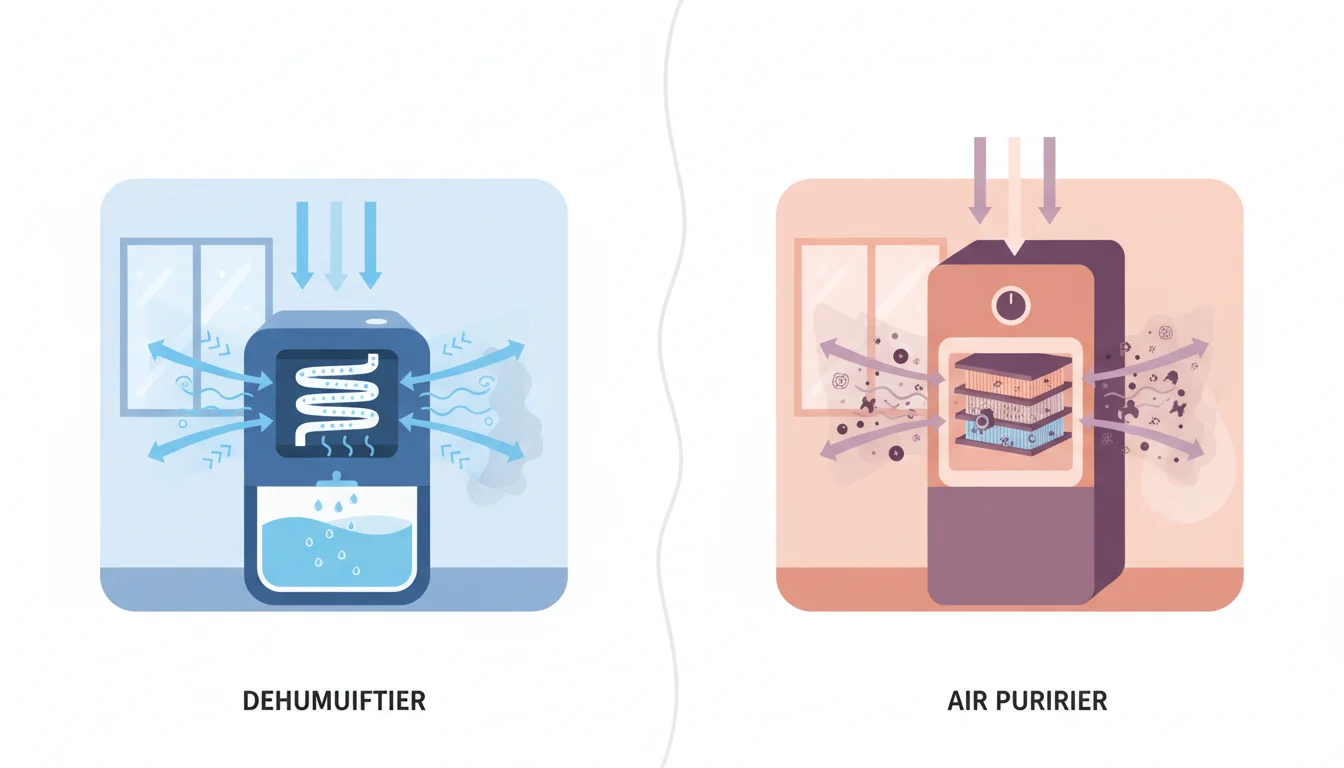
Key Differences: Dehumidifier vs Air Purifier Comparison
The difference between dehumidifier and air purifier comes down to one question: are you fighting moisture or particles?
| Feature | Dehumidifier | Air Purifier |
|---|---|---|
| Primary Function | Removes water vapor from air | Filters particles from air |
| What It Removes | Excess humidity, condensation | Dust, pollen, dander, smoke, mold spores |
| Energy Use | 300-700 watts | 50-200 watts |
| Maintenance | Empty water tank regularly or connect drain hose | Replace filters every 6-12 months |
| Best For | Damp basements, humid climates, mold prevention | Allergies, asthma, dust control, pet owners |
| Average Cost | $150-$400 | $100-$500 |
| Noise Level | Moderate to loud (compressor) | Quiet to moderate (fan only) |
Neither device substitutes for the other. I've seen people run air purifiers for months wondering why their basement still smells musty. The mold kept growing because humidity stayed at 70%.
Running costs differ significantly too. A dehumidifier working hard in a humid climate costs $15-30 monthly in electricity. An air purifier running 24/7 adds maybe $5-10 to your bill HouseFresh.
When to Use a Dehumidifier vs Air Purifier
Start by identifying your primary symptom, then match it to the right device.
Choose a dehumidifier when:
- Your basement or crawl space feels damp or clammy
- Indoor humidity readings exceed 50% consistently
- Mold keeps returning after cleaning
- Windows fog up with condensation regularly
- Wood floors are warping or furniture joints are loosening
Choose an air purifier when:
- Allergies or asthma symptoms spike indoors
- Dust settles on surfaces within days of cleaning
- Pet dander triggers reactions in family members
- Wildfire smoke or urban pollution affects your area
- Cooking odors linger longer than they should
Geography matters here. Living in Houston, New Orleans, or Miami? A dehumidifier earns its place year-round. Living in Phoenix or Denver? You probably need humidification, not removal.
Seasonality plays a role too. Dehumidifiers work hardest during humid summer months. Air purifiers provide value every season since dust, dander, and allergens don't take breaks.
Trust me on this: don't buy based on what you think the problem is. Spend $15 on a hygrometer first. If humidity reads above 50%, start with a dehumidifier. If humidity sits between 30-50% but you're still experiencing symptoms, an air purifier is your answer.
Health Conditions: Which Device Helps What
Different health concerns require different devices—and sometimes both.
| Health Condition | Best Device | Why It Helps |
|---|---|---|
| Seasonal Allergies | Air Purifier | Removes pollen, dust, and outdoor allergens |
| Asthma | Air Purifier | Captures triggers like dust mites, pet dander, smoke |
| Mold Sensitivity | Both | Dehumidifier prevents growth, purifier captures spores |
| Eczema | Dehumidifier | Lower humidity reduces dust mite populations |
| Respiratory Infections | Air Purifier | Reduces airborne pathogens and irritants |
| Chemical Sensitivity | Air Purifier (with carbon) | Activated carbon absorbs VOCs and odors |
For mold sensitivity, the combination approach works best. A dehumidifier stops new mold from growing by keeping conditions inhospitable. An air purifier catches existing spores floating through your space. This dual strategy outperforms either device alone HisoAir.
I need to be direct here: neither device replaces medical treatment. If you have serious respiratory conditions, work with your healthcare provider. These devices support your health but don't cure anything.
Can You Use Both Together? When It Makes Sense
Running both devices provides comprehensive air quality control that neither achieves alone.
Scenarios where both devices make sense:
- Basements with active mold issues and poor ventilation
- Homes with pets in humid climates like the Gulf Coast
- Anyone dealing with both humidity problems and allergy symptoms
- Older homes with moisture intrusion and dust issues
Combo units exist that claim to do both jobs. Let's be honest: they compromise on both functions. A dedicated dehumidifier pulls more moisture. A dedicated air purifier moves more air through better filters. If budget allows, buy separate devices.
Placement tips for using both:
Position them in different areas for maximum coverage. The dehumidifier belongs in your dampest space—usually the basement or bathroom area. The air purifier works best in rooms where you spend the most time, like bedrooms or living areas.
Running both costs more in electricity and maintenance. Expect $20-40 monthly in combined operating costs plus annual filter replacements around $50-100. Compare that to professional mold remediation at $1,500-5,000 or ongoing allergy medications. The math favors prevention.
FAQ
Does a dehumidifier help with dust?
No. Dehumidifiers only remove moisture from air. Dust particles pass through untouched. If dust accumulation bothers you, an air purifier with HEPA filtration captures those particles effectively.
Will an air purifier prevent mold?
An air purifier captures mold spores floating in air but cannot prevent mold growth. Mold needs moisture to grow. Only a dehumidifier addresses the root cause by keeping humidity below 50%.
How long should I run each device daily?
Run dehumidifiers until humidity drops below 50%, then cycle as needed. Air purifiers work best running continuously on low settings. Most quality units cost only pennies per hour to operate.
Which device is better for a baby's nursery?
For most nurseries, an air purifier provides greater benefit by removing dust, allergens, and airborne irritants. Add a dehumidifier only if humidity consistently exceeds 50% or you notice condensation.
Do I need to replace filters in a dehumidifier?
Dehumidifiers have simple mesh filters protecting internal coils—not air-cleaning filters. Rinse these monthly. Air purifiers require HEPA filter replacement every 6-12 months depending on usage and air quality.
Which device uses more electricity?
Dehumidifiers consume 300-700 watts compared to 50-200 watts for air purifiers. In a humid climate, expect dehumidifiers to add $15-30 monthly to your electric bill versus $5-10 for air purifiers.
Can one device do both jobs?
Combo units exist but underperform compared to dedicated devices. If you have both humidity and particle concerns, separate units deliver better results. The investment pays off in actual air quality improvement.
Share this post
Related Articles
Would a Dehumidifier Help With Asthma? What Science Says in 2026
Would a Dehumidifier Help With Asthma? What Science Says in 2026
Best Dehumidifier for RV: Complete Buyer's Guide for 2026
Best Dehumidifier for RV: Complete Buyer's Guide for 2026
Will a Dehumidifier Get Rid of Silverfish? Complete Guide to Humidity-Based Pest Control
Will a Dehumidifier Get Rid of Silverfish? Complete Guide to Humidity-Based Pest Control