Does a Dehumidifier Help With Smell? The Science Behind Odor Elimination
Does a Dehumidifier Help With Smell? The Science Behind Odor Elimination
A dehumidifier reduces moisture-related odors by eliminating the humidity that allows mold, mildew, and bacteria to thrive. Indoor humidity above 60% creates ideal conditions for these odor-causing organisms to proliferate. This guide explains how dehumidifiers help with smell in practice, which odors respond to dehumidification, and how to maximize results in every room.
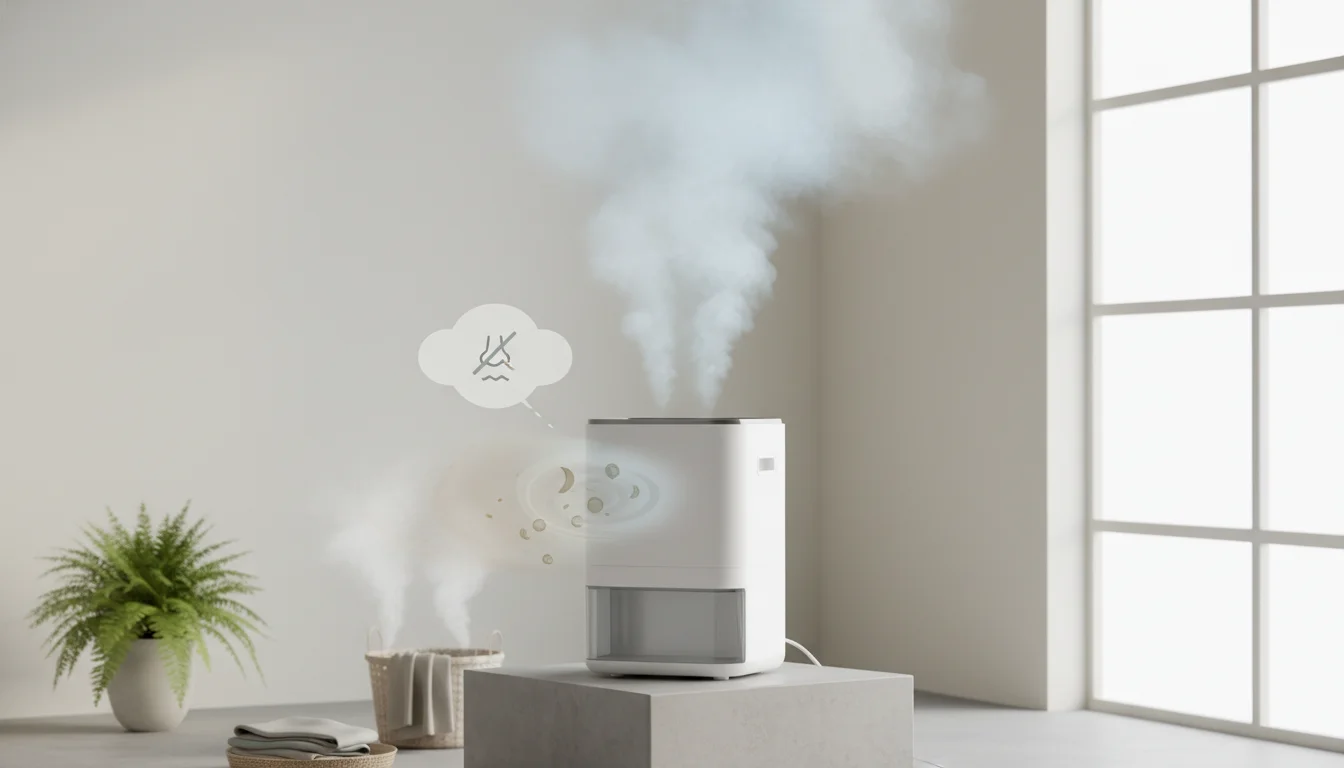
How Dehumidifiers Work to Reduce Odors
Dehumidifiers pull humid air across cold coils, causing water vapor to condense and collect in a reservoir. This process lowers ambient moisture levels, making your indoor environment inhospitable to the organisms responsible for most persistent household smells.
The relationship between humidity and smell works like this: mold spores need moisture above 60% relative humidity to germinate and grow. Bacteria multiply faster in damp conditions. Mildew colonizes any surface that stays wet for more than 48 hours.
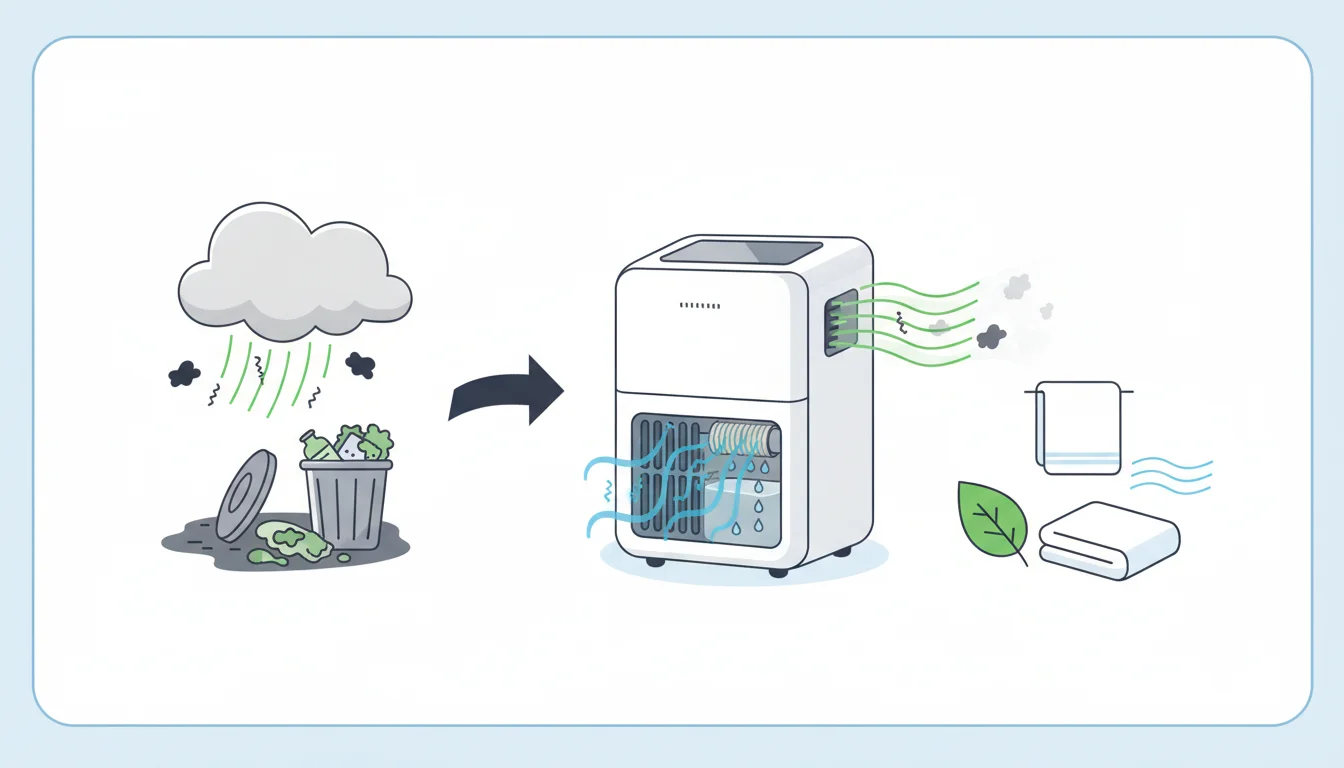
Once you understand how dehumidifiers work, the odor connection becomes clear. These units don't mask smells or filter them from the air—they attack the root cause. No moisture means no mold growth, and no mold growth means no musty smell.
Here's what surprised me when I first researched this topic: dehumidifiers don't remove existing odor particles floating in your air. Instead, they prevent new odors from forming by creating conditions where odor-causing organisms cannot survive. This distinction matters because severe mold infestations need professional remediation before dehumidification becomes effective.
Think of it as turning off the faucet rather than mopping up the floor. You're stopping odor production at its source.
What Types of Smells Can a Dehumidifier Eliminate?
Dehumidifiers eliminate moisture-dependent odors including musty basement smells, mildew from bathrooms, and stale air in enclosed spaces. They cannot address cooking odors, pet smells, smoke, or chemical fumes.
| Odor Type | Dehumidifier Effective? | Why |
|---|---|---|
| Musty/damp smell | Yes | Removes moisture that creates the odor |
| Mold smell | Yes | Inhibits mold growth that produces smell |
| Mildew odor | Yes | Eliminates conditions mildew needs |
| Stale enclosed air | Yes | Improves air circulation and freshness |
| Cooking odors | No | Caused by airborne particles, not moisture |
| Pet smells | No | Dander and urine require filtration |
| Smoke odors | No | Smoke particles need air purification |
| Chemical fumes | No | Requires ventilation, not humidity control |
A dehumidifier works as a musty smell fix because that classic basement odor comes directly from fungal growth. According to ServiceMaster Restore, dehumidifiers reduce musty odors associated with mold and mildew growth by making environments less hospitable to these organisms.
Fair warning: if you have active mold growth, a dehumidifier provides only temporary relief. The unit addresses the symptom while the underlying problem persists. You'll need mold remediation to eliminate smells that dehumidifier treatment alone cannot fix.
Optimal Humidity Levels for Odor Prevention
Target 30-50% relative humidity to prevent odor-causing organisms from thriving. Below 50% inhibits mold spores and dust mites, while above 60% creates conditions where these organisms multiply rapidly.
| Humidity Level | Effect on Odors | Recommended Action |
|---|---|---|
| Below 30% | Too dry, can cause other issues | Add moisture |
| 30-40% | Excellent odor prevention | Ideal for winter |
| 40-50% | Optimal balance | Target range year-round |
| 50-60% | Risk zone for mold growth | Run dehumidifier |
| Above 60% | Active mold/mildew conditions | Aggressive dehumidification needed |
Regional considerations matter significantly. Humid climates like Florida or Louisiana require more aggressive dehumidification than arid regions like Arizona. Basements in any climate need dehumidifier settings around 45-50% due to ground moisture.
The EPA recommends maintaining 30-50% relative humidity for healthy indoor air quality. A hygrometer costs under $15 and tells you exactly where your home stands. I check mine weekly and adjust seasonally—winter months typically need less dehumidification than summer.
Room-by-Room Guide: Where Dehumidifiers Help Most
Basements benefit most from dehumidification due to poor ventilation, ground-level moisture, and lack of natural air circulation. Every other problem room connects back to similar conditions.
Basements
Ground moisture seeps through foundation walls and floors constantly. Position your unit near the moisture source, whether that's a sump pump, foundation wall, or visible damp area. Keep 30-50cm clearance around the machine for proper airflow. Basement dehumidifier odor control requires units specifically designed for harsh conditions, since standard models often struggle.
Bathrooms
Shower steam creates daily humidity spikes that feed mildew growth. Place your dehumidifier where moisture accumulates most—typically near the shower or tub—and run it during and after bathing. The musty smell that develops in shower grout and caulk? That's mildew responding to repeated moisture exposure.
Laundry Rooms
Washing machines and damp clothing generate significant humidity. Position the unit near water appliances to prevent that sour smell that develops when wet fabrics sit in humid air too long. Trust me on this one: running a dehumidifier in your laundry room changes everything about how your clean clothes smell.
Crawl Spaces
These overlooked areas often cause whole-house odor problems. Musty air from crawl spaces migrates upward through floor systems. A crawl space dehumidifier protects structural integrity while eliminating a major odor source most homeowners never consider.
The question of how to remove musty smell from your house often comes down to finding and treating the specific room generating that moisture.
Dehumidifier vs Air Purifier: Which Is Better for Odors?
Dehumidifiers eliminate moisture-related odors at their source, while air purifiers with activated carbon filters remove airborne odor particles. The right choice depends entirely on what's causing your smell problem.
| Feature | Dehumidifier | Air Purifier |
|---|---|---|
| Best for | Musty, damp, mold smells | Smoke, cooking, pet odors |
| How it works | Removes moisture | Filters particles |
| Addresses root cause? | Yes, for moisture odors | No, removes symptoms |
| Ongoing maintenance | Empty tank, clean filter | Replace filters |
| Typical cost | $150-400 | $100-500 |
| Noise level | Moderate to high | Low to moderate |
Will a dehumidifier remove odors from smoke or cooking? No—these require carbon filtration. Will an air purifier fix a musty basement? Also no. It filters the smell, but new odors keep forming because the moisture problem persists.
The best results often come from using both. A dehumidifier handles the musty baseline smell while an air purifier catches everything else. Combination units exist but typically compromise effectiveness in both functions. I recommend separate, dedicated units if your budget allows.
Timeline: How Long Before You Notice Smell Improvement?
Expect initial moisture reduction within 24-48 hours, noticeable odor improvement in 3-7 days for mild cases, and 2-4 weeks for severe mold situations requiring consistent operation.
| Situation | Timeline to Improvement | Notes |
|---|---|---|
| Mild dampness | 24-48 hours | Humidity drops quickly |
| Moderate musty smell | 3-7 days | Odor-causing organisms begin dying |
| Established mold odor | 2-4 weeks | Requires consistent 24/7 operation |
| Severe infestation | Ongoing | Professional remediation needed first |
Several factors affect your timeline. Room size matters, since larger spaces need more time. Initial humidity levels determine how much moisture needs removal. Ventilation quality impacts how quickly the dehumidifier can process room air. Temperature also plays a role because most units work less efficiently below 65°F.
Dehumidifier effectiveness depends on running the unit continuously until target humidity stabilizes. Turning it on for a few hours daily won't produce results. Commit to consistent operation for at least two weeks before evaluating smell improvement.
Maintenance Tips to Prevent Your Dehumidifier From Causing Odors
Empty and clean the water collection tank every 1-2 days. Standing water inside the unit becomes a breeding ground for the same organisms you're trying to eliminate.
- Water tank: Empty daily in humid conditions. Wash with mild soap weekly.
- Air filter: Clean every two weeks. Replace according to the manufacturer's schedule.
- Coils: Wipe down quarterly. Check for dust and debris buildup.
- Exterior: Wipe with a damp cloth monthly.
- Drain hose: If using continuous drainage, flush monthly.
Warning sign to watch for: if your dehumidifier itself smells musty, the unit needs immediate cleaning. According to Ecoair, clogged air filters, dust buildup, and mold growth within the unit cause foul odors that spread throughout your space.
A neglected dehumidifier becomes part of the problem rather than the solution. I learned this lesson after ignoring my basement unit for three months. The smell got worse, not better, and opening that water tank was an experience I'd rather not repeat.
FAQ
Can a dehumidifier remove cigarette smoke smell?
No. Smoke odor comes from particles embedded in surfaces and floating in air. A dehumidifier only removes moisture. You need an air purifier with activated carbon filtration for smoke odors.
Will a dehumidifier help with pet urine smell in carpet?
Not directly. Pet urine odor requires enzymatic cleaners to break down uric acid crystals. A dehumidifier prevents secondary mold growth in damp carpet but won't address the urine itself.
Should I run my dehumidifier 24/7 for odor control?
Run it continuously until reaching your target humidity of 30-50%. Once stabilized, you can cycle the unit on and off. Most modern dehumidifiers have humidistats that automate this process.
Why does my basement still smell musty with a dehumidifier running?
Your unit may be undersized for the space, the humidity target may be set too high, or active mold growth may need professional remediation before dehumidification can work effectively. Check that the water tank fills regularly to confirm the unit is functioning.
Can I use a dehumidifier and air purifier together?
Yes. This combination addresses both moisture-related and airborne odors. Place them in different areas of the room for best coverage. Running both improves overall air quality significantly.
What size dehumidifier do I need for odor control?
Match capacity to room size and moisture level. A 30-pint unit handles moderately damp spaces up to 1,500 square feet. Severely damp basements need 50-70 pint units regardless of square footage.
Do dehumidifiers help with musty smell in closets?
Yes. Small closet dehumidifiers or moisture absorbers work well for enclosed spaces. Position the unit to allow airflow and keep closet doors slightly open when possible.
How do I know if my humidity is causing the smell?
Buy a hygrometer. If your reading exceeds 50% relative humidity and the smell is musty rather than specific to cooking, pets, or chemicals, excess moisture is likely the culprit.
Share this post
Related Articles
Would a Dehumidifier Help With Asthma? What Science Says in 2026
Would a Dehumidifier Help With Asthma? What Science Says in 2026
Best Dehumidifier for RV: Complete Buyer's Guide for 2026
Best Dehumidifier for RV: Complete Buyer's Guide for 2026
Will a Dehumidifier Get Rid of Silverfish? Complete Guide to Humidity-Based Pest Control
Will a Dehumidifier Get Rid of Silverfish? Complete Guide to Humidity-Based Pest Control