Will a Dehumidifier Dry Out Damp Walls? Complete Guide to Wall Moisture Removal
Will a Dehumidifier Dry Out Damp Walls? Complete Guide to Wall Moisture Removal
Dehumidifiers remove moisture from indoor air, creating conditions that encourage water to evaporate from damp wall surfaces. According to HVAC specialists, significant wall drying typically takes several days to a few weeks, depending on dampness severity and dehumidifier capacity. This guide covers how dehumidifiers work on wall moisture, their limitations, optimal usage practices, and when you need additional solutions.
How Dehumidifiers Work to Remove Wall Moisture
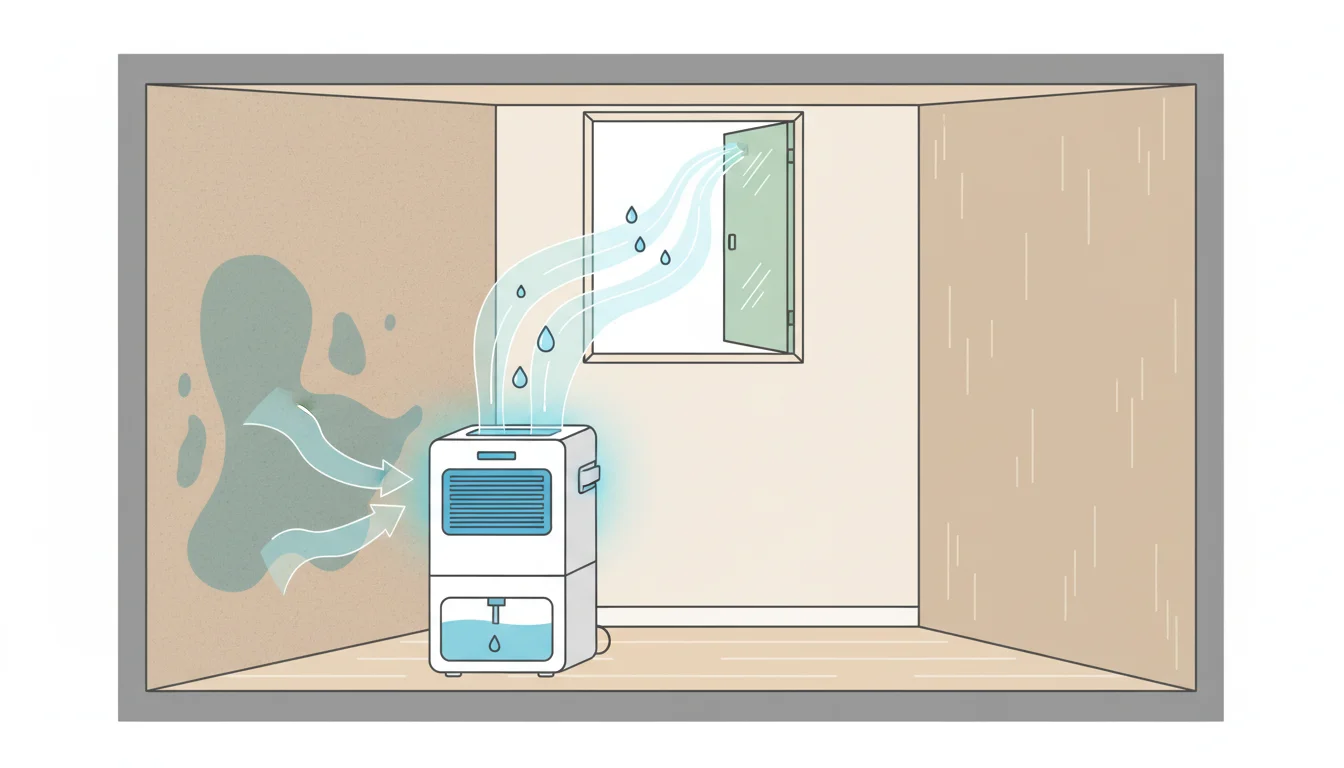
Will a dehumidifier dry out damp walls? Yes, but through an indirect process. These appliances draw humid air over refrigerated coils, condensing water vapor and collecting it in a tank while returning drier air to the room.
The moisture migration works like this: lowering room humidity creates a vapor pressure difference between wet walls and surrounding air. Water molecules move from areas of high concentration (your damp walls) to areas of low concentration (the drier room air). The dehumidifier then captures this airborne moisture.
| Factor | Optimal Range | Why It Matters |
|---|---|---|
| Target humidity | 30-50% RH | Creates maximum vapor pressure differential |
| Room temperature | 15-30°C | Affects evaporation rate and dehumidifier efficiency |
| Air circulation | Continuous | Moves moisture away from wall surfaces faster |
| Dehumidifier placement | Center of room | Allows even air distribution |
Keep furniture away from affected walls. I learned this the hard way after finding mold behind a bookcase I'd pushed against a damp corner. That 6-inch gap makes a real difference in airflow. According to Ideal Home, proper positioning with adequate space for air circulation prevents enclosed pockets where moisture stagnates.
Types of Dehumidifiers for Drying Damp Walls
Your choice of dehumidifier depends on room temperature, severity of dampness, and the space you need to dry. The wrong type wastes energy and extends drying time significantly.
| Dehumidifier Type | Best Temperature Range | Ideal Use Case | Daily Capacity |
|---|---|---|---|
| Refrigerant (compressor) | Above 15°C | Heated homes, summer use | 10-20 liters |
| Desiccant | Below 15°C | Unheated garages, winter, basements | 7-12 liters |
| Commercial/industrial | Any temperature | Flood damage, severe dampness | 30-100+ liters |
Refrigerant models dominate the household market. They work well in typical living conditions but struggle in cold spaces. Below 15°C, ice forms on the coils and efficiency drops dramatically.
Desiccant units use moisture-absorbing materials instead of refrigeration. They cost more to run but perform consistently in cold conditions. For an unheated garage or basement with damp walls, these are your only real option during winter.
Commercial units make sense after flooding or burst pipes. Wall drying after flood damage requires moving serious amounts of water. A residential unit pulling 12 liters daily will take months to accomplish what an industrial machine does in weeks. Rental costs of around $50-100 per day often beat the expense of prolonged dampness.
How Long Does It Take to Dry Damp Walls with a Dehumidifier?
Surface moisture from condensation typically improves within 1-2 weeks of continuous dehumidifier operation. Deep wall dampness from flooding or leaks takes 4-8 weeks minimum, sometimes longer for thick masonry.
| Dampness Type | Wall Material | Expected Drying Time |
|---|---|---|
| Light condensation | Plaster | 1-2 weeks |
| Moderate dampness | Plaster | 2-4 weeks |
| Flood damage | Plaster | 4-6 weeks |
| Light condensation | Brick/concrete | 2-3 weeks |
| Moderate dampness | Brick/concrete | 4-6 weeks |
| Flood damage | Brick/concrete | 8-12 weeks |
The EPA recommends drying building materials within 24-48 hours to prevent mold growth. This refers to surface drying—moisture trapped deep in masonry persists much longer.
Tracking progress matters. A pin-type moisture meter costs $20-40 and removes the guesswork. Readings above 20% indicate ongoing dampness. Most wall materials should reach below 15% before you consider the job done. Check weekly and record your readings.
Watch for these warning signs of problems: moisture meter readings that plateau or increase, persistent musty odors, new mold spots appearing, or paint continuing to bubble and peel. Any of these after 4 weeks of dehumidifier use suggests an ongoing moisture source you haven't addressed.
Limitations: When a Dehumidifier Alone Won't Work
Dehumidifiers remove airborne moisture. They cannot extract water that keeps entering your walls from an unresolved source. This distinction determines whether you'll succeed or waste months running a machine that never fixes the problem.
| Damp Type | Root Cause | Why Dehumidifier Fails Alone | Required Solution |
|---|---|---|---|
| Rising damp | Missing/failed damp-proof course | Ground moisture continuously enters walls | DPC installation |
| Penetrating damp | External leaks, damaged pointing | Water enters through walls faster than it dries | Exterior repairs first |
| Condensation | Poor ventilation | Moisture generated faster than removed | Improve ventilation |
| Flood damage | One-time water event | May work alone if volume is manageable | Professional assessment if severe |
According to Timberwise, "Dehumidifiers treat damp symptoms, not the root cause, and do not stop damp." Running one while ignoring a leaking gutter or failed damp-proof course is like mopping the floor while the tap runs.
When to call a professional: Consider expert help if dampness persists beyond 4-6 weeks despite proper dehumidifier use, visible mold covers more than 10 square feet, salt crystals or white deposits appear on walls, plaster becomes soft and crumbly, or tide marks keep returning. These signs indicate problems beyond DIY solutions.
Fair warning: some contractors push expensive treatments for "rising damp" that's actually condensation. Get multiple opinions before agreeing to major remediation work.
Heater vs Dehumidifier: Which Is Better for Damp Walls?
Dehumidifiers win for moisture removal efficiency. Heaters speed evaporation but leave moisture in the air unless you ventilate it out, which wastes energy heating air you then expel.
| Approach | Energy Cost | Effectiveness | Best Season |
|---|---|---|---|
| Dehumidifier alone | Low-moderate | Good in warm conditions | Summer |
| Heater alone | High | Poor without ventilation | Not recommended |
| Heater + ventilation | Very high | Moderate | Emergency only |
| Dehumidifier + gentle heat | Moderate | Excellent | Winter |
| Desiccant dehumidifier | Moderate-high | Excellent in cold | Winter |
The combination approach works best in winter: run background heating to keep the room around 18-20°C while the dehumidifier captures moisture. Warmer air holds more water vapor, pulling moisture from walls faster. The dehumidifier then removes it from the air.
Energy costs matter over weeks of operation. A typical refrigerant dehumidifier uses 200-400 watts. A 2kW heater running constantly costs 5-10 times more in electricity. The math favors dehumidification for sustained drying.
Here's an honest assessment of desiccant units: they generate heat as a byproduct of the drying process, warming the room slightly while dehumidifying. This dual action makes them particularly effective in cold, damp spaces where refrigerant units struggle.
Best Practices for Using a Dehumidifier on Damp Walls
Proper setup determines whether your dehumidifier takes weeks or months to dry your walls. Small adjustments in placement and operation make substantial differences.
- Position centrally in the affected room, at least 6 inches from any wall or furniture
- Close all doors and windows during operation to prevent outdoor humidity from replacing removed moisture
- Use continuous drainage if available, connecting a hose to a floor drain or bucket below unit level
- Empty the tank daily if no drainage option exists—full tanks shut off the unit automatically
- Add a fan to move air across damp wall surfaces, aiming it parallel to the wall rather than directly at it
- Run 24/7 initially for the first 1-2 weeks until humidity stabilizes below 50%
- Monitor and adjust using a separate hygrometer to verify the dehumidifier's readings
Trust me on the drainage setup. I forgot to empty the tank before a weekend away and returned to find the unit had shut off 12 hours after I left. Two days of zero dehumidification set my progress back noticeably.
According to [Cactus Wren Restoration], dehumidifiers work more efficiently when combined with improved ventilation and air circulation around affected areas.
Preventing Future Damp Problems After Walls Are Dry
Fixing the original moisture source permanently saves you from repeating this entire process. Identify what caused the dampness and address it before declaring victory.
- Repair external issues: Fix damaged gutters, cracked pointing, failed render, or blocked drains that allow water against walls
- Install extraction fans: Kitchen and bathroom fans vented to outside remove moisture at the source
- Add trickle vents: Small vents in window frames provide constant background ventilation
- Maintain consistent heating: Cold surfaces attract condensation, so keep rooms above 15°C in winter
- Inspect annually: Check gutters, downpipes, and exterior walls each autumn before the wet season
- Consider ongoing dehumidification: Naturally damp basements or north-facing rooms benefit from regular dehumidifier use
The health stakes are real. Persistent dampness enables mold growth within 24-48 hours of moisture exposure. Mold releases spores and mycotoxins linked to respiratory problems, allergic reactions, and worsened asthma symptoms. Dry walls aren't just about protecting your building—they protect the people inside it.
FAQ
Can a dehumidifier remove black mold from walls?
No. Dehumidifiers prevent new mold growth by removing moisture but cannot kill or remove existing mold. Clean visible mold with appropriate fungicidal solutions first, then use dehumidification to prevent regrowth.
Should I drill holes in walls to help them dry faster?
Professional restoration teams sometimes drill weep holes in severely water-damaged walls. For typical household dampness, this causes unnecessary damage. Stick with surface drying methods unless a restoration specialist recommends otherwise.
What size dehumidifier do I need for damp walls?
For rooms up to 50 square meters with moderate dampness, a 12-20 liter per day capacity unit works well. Severe dampness or larger spaces need 20+ liters daily or multiple units.
Can I use a dehumidifier in a room without electricity?
Standalone dehumidifiers require power. For off-grid spaces, consider calcium chloride moisture absorbers as a low-capacity alternative, or run a generator to power a standard unit.
Will insurance cover dehumidifier rental for flood damage?
Many home insurance policies cover water damage restoration costs, including equipment rental. Document the damage with photos, save all receipts, and contact your insurer before incurring major expenses.
How do I know if my walls are dry enough to repaint?
Use a moisture meter. Plaster should read below 15% moisture content before painting. Applying paint over damp walls traps moisture, causes peeling, and promotes mold growth behind the paint film.
Is it cheaper to run a dehumidifier or central heating for damp?
Dehumidifiers cost significantly less for moisture control. A 300-watt dehumidifier running 24 hours uses about 7.2 kWh daily. Heating a room with a 2kW heater for the same period uses nearly 50 kWh.
Can dehumidifiers damage furniture or wooden floors?
Excessively low humidity below 30% can cause wood to crack and furniture joints to loosen. Use a hygrometer to maintain humidity between 40-50% once initial drying is complete.
Share this post
Related Articles
Would a Dehumidifier Help With Asthma? What Science Says in 2026
Would a Dehumidifier Help With Asthma? What Science Says in 2026
Best Dehumidifier for RV: Complete Buyer's Guide for 2026
Best Dehumidifier for RV: Complete Buyer's Guide for 2026
Will a Dehumidifier Get Rid of Silverfish? Complete Guide to Humidity-Based Pest Control
Will a Dehumidifier Get Rid of Silverfish? Complete Guide to Humidity-Based Pest Control