Will a Dehumidifier Help With Mildew Smell? What Really Works in 2026
Will a Dehumidifier Help With Mildew Smell? What Really Works in 2026
Mildew produces musty odors when indoor humidity exceeds 60%, creating ideal conditions for fungal growth on walls, carpets, and hidden surfaces. Maintaining humidity between 30-50% reduces mold spore activity by removing the moisture these organisms need to survive. This guide explains when a dehumidifier will help with mildew smell, when it falls short, and what else you need for complete odor elimination.
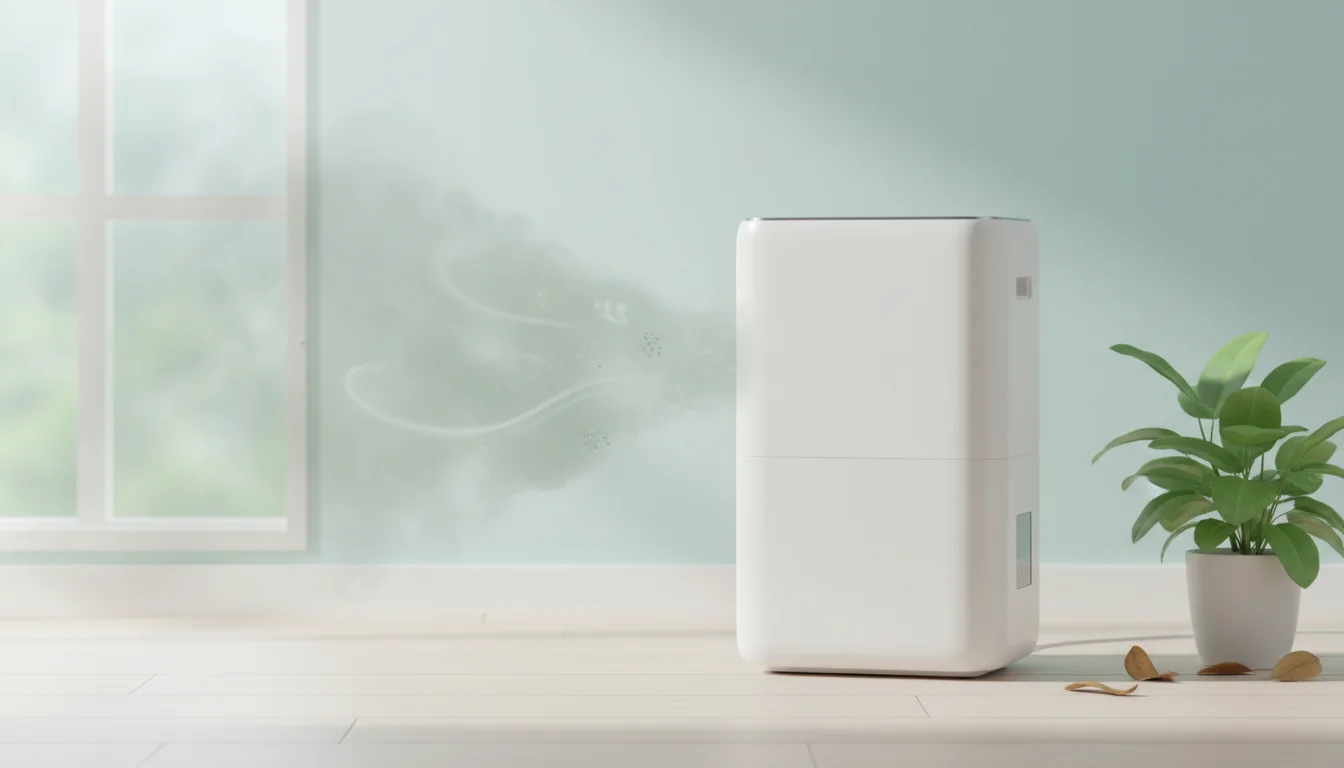
How Dehumidifiers Work to Combat Musty Odors
A dehumidifier for musty smell pulls humid air through refrigerated coils, condenses the moisture into a collection tank, then releases dry air back into your space.
| Process Stage | What Happens | Impact on Mildew |
|---|---|---|
| Air Intake | Fan draws warm, humid air into unit | Captures moisture-laden air from problem areas |
| Cooling Coils | Air temperature drops, moisture condenses | Extracts water vapor before it feeds mildew |
| Water Collection | Condensed water drains to reservoir | Removes 20-70 pints daily depending on capacity |
| Dry Air Return | Warmed, dry air circulates back | Creates inhospitable environment for growth |
The ideal dehumidifier humidity level for mildew prevention sits at 30-50% relative humidity. Above 60%, mold spores settle on surfaces and multiply within 24-48 hours. Below 50%, those same spores struggle to establish colonies.
Here's what I learned testing multiple units: a dehumidifier addresses the cause of mildew smell, not the symptom. It starves existing colonies of moisture while preventing new growth. However, if mold is already thriving behind your drywall, lowering humidity won't make that established colony vanish. The smell comes from microbial gases these colonies release, and those gases keep coming until you remove the source. Climate Control KC confirms that modern units with built-in hygrometers automate this protection by maintaining your target humidity continuously.

When a Dehumidifier Will Help With Mildew Smell
The right conditions make dehumidifiers remarkably effective at eliminating musty odors within days to weeks.
Scenario 1: Seasonal Humidity Spikes Summer brings 70-80% humidity indoors. Your basement smells damp but shows no visible mold. A dehumidifier for basement musty smell drops humidity to 45% within hours, and that stale odor fades within a week.
Scenario 2: Basement Dampness Without Visible Growth The concrete floor feels clammy. The air smells earthy. No black spots anywhere. This is exactly when dehumidification works best—stopping the problem before mold colonies establish.
Scenario 3: Post-Cleanup Maintenance You scrubbed the bathroom mildew. The walls are clean. Running a dehumidifier afterward keeps humidity below the 60% threshold where regrowth starts.
Scenario 4: High-Humidity Climates Coastal areas and tropical zones maintain 65-75% outdoor humidity year-round. Continuous dehumidification becomes essential infrastructure, not a temporary fix.
How to get rid of musty smell with a dehumidifier: Set your target to 45%, place the unit centrally in the problem room, and run it continuously for the first week. Mild cases improve noticeably within 3-5 days. Moderate dampness takes 2-3 weeks of consistent operation. Sylvane recommends monitoring humidity readings daily until you establish a baseline for your space.
When a Dehumidifier Won't Be Enough
Dehumidifiers prevent mold growth. They do not remove mold odor from established colonies or fix the conditions that created them.
- Visible mold patches on walls, ceilings, or carpets require physical removal with appropriate cleaners or professional treatment
- Active water leaks or flooding history means moisture enters faster than any dehumidifier can extract it
- Porous materials saturated with mildew retain odor molecules even after the surface dries
- Mold behind walls or under flooring keeps producing smell regardless of room humidity levels
- Health symptoms like respiratory irritation while the dehumidifier runs suggest hidden contamination
The dehumidifier vs mildew smell myth: many homeowners expect the appliance to cure existing problems. It cannot. FDP Mold Remediation states clearly that until you physically remove mold colonies, the microbial gases causing that smell will keep coming.
Here's the warning sign I missed in my own basement: humidity readings showed 42%, well within safe range, but the smell persisted. It turned out mold had colonized the back of the drywall where a slow pipe leak kept conditions perfect for growth. The dehumidifier was working fine. The problem existed in a microenvironment it couldn't reach.
Do dehumidifiers remove mold odor? Only indirectly, by making conditions unfavorable for the organisms producing it. No direct odor removal happens.
Choosing the Right Dehumidifier for Mildew Control
Matching capacity to your space determines whether you eliminate musty odors or merely reduce them slightly.
| Room Condition | Space Size | Recommended Capacity |
|---|---|---|
| Moderately damp | 500 sq ft | 20-30 pints/day |
| Very damp | 500 sq ft | 30-40 pints/day |
| Wet or extremely damp | 500 sq ft | 40-50 pints/day |
| Moderately damp | 1000 sq ft | 30-40 pints/day |
| Very damp | 1000 sq ft | 40-50 pints/day |
| Wet or extremely damp | 1000 sq ft | 50-70 pints/day |
Portable units cost $150-$400 and handle single rooms effectively. They're the best dehumidifier for musty odors in a specific space.
Whole-house dehumidifiers install into your HVAC system for $1,200-$2,800 including installation. A whole-house dehumidifier for mildew makes sense when humidity problems span multiple rooms or your climate demands continuous moisture control.
Essential features worth paying extra for:
- Auto-humidistat maintains your target setting without manual adjustment
- Continuous drain option eliminates daily tank emptying
- Auto-defrost prevents coil freezing in cooler basements
- Washable filter reduces long-term maintenance costs
Place your unit in the center of the problem area, 6-12 inches from walls, with clear airflow on all sides. Tucking it in a corner reduces effectiveness by 30-40%. Ensign Building Solutions emphasizes that proper placement matters almost as much as capacity selection.
Complementary Solutions for Complete Odor Elimination
A dehumidifier handles humidity. These additions handle everything else.
Air purifiers with activated carbon filters capture the volatile organic compounds mold releases. The carbon adsorbs odor molecules that dehumidification alone leaves circulating. A University of Cincinnati study found that combining dehumidification with HEPA filtration reduced airborne mold spores more effectively than either method alone. Oransi details this research.
Ventilation improvements exchange stale indoor air with fresh outdoor air. Run bathroom exhaust fans during and 30 minutes after showers. Open windows on low-humidity days to flush accumulated odor molecules.
Deep cleaning protocols address mildew at its source:
- Non-porous surfaces: white vinegar or 10% bleach solution
- Fabric and carpet: enzyme-based cleaners that break down organic material
- Wood surfaces: TSP substitute followed by primer sealer
Natural odor absorbers work as maintenance tools:
- Baking soda in open containers absorbs ambient odors
- Activated charcoal bags in closets and storage areas
- DampRid in small enclosed spaces
How to get rid of musty smell with a dehumidifier plus these methods: run the dehumidifier continuously while cleaning, then maintain 45% humidity afterward. The cleaning removes existing mold. The dehumidifier prevents return. The air purifier catches what escapes into the air. Fair warning—skipping any one element leaves a gap that allows the smell to return.
Professional remediation costs $500-$6,000 depending on scope. It's worth the investment when mold covers more than 10 square feet, exists inside wall cavities, or triggers health symptoms.
Dehumidifier Maintenance to Prevent Odor Problems
Your dehumidifier can become a source of musty smell if you neglect basic upkeep.
- Empty the water tank every 1-2 days when not using continuous drain
- Clean the tank weekly with soap and water to prevent biofilm buildup
- Wash or replace filters monthly during heavy-use seasons
- Inspect coils quarterly for mold growth inside the unit itself
- Perform an annual deep clean that includes coil cleaning with foaming cleaner and tank sanitization with diluted bleach
I once traced a persistent basement smell to the dehumidifier itself. Three months of collected moisture had created a film inside the tank that smelled worse than the original problem. Now I clean it weekly during summer and every two weeks otherwise.
FAQ
How long does it take for a dehumidifier to remove musty smell?
Mild seasonal mustiness improves within 3-7 days of continuous operation at 45% humidity. Persistent dampness in basements takes 2-4 weeks. Severe cases with established mold require remediation first.
What humidity level kills mildew?
Mildew cannot survive below 30% humidity, but 40-50% prevents growth while maintaining comfort. Dropping below 30% causes wood cracking, static electricity, and respiratory discomfort.
Can a dehumidifier make mildew smell worse initially?
Yes. As hidden moisture evaporates from walls and carpets, concentrated odors release into the air. This temporary intensification means the unit is working. The smell diminishes as materials fully dry.
Should I run my dehumidifier 24/7 for mildew smell?
Run continuously until you reach target humidity, then allow the auto-humidistat to cycle the unit. Most spaces need 8-12 hours daily to maintain 45% in humid climates.
Where should I place a dehumidifier for maximum odor reduction?
Position the unit centrally in the affected room, elevated if possible, with 12 inches of clearance on all sides. Avoid corners and areas blocked by furniture that restrict airflow.
Will a dehumidifier help with mildew smell in my car?
Portable units designed for cars remove 8-12 ounces daily and reduce musty odors from damp carpets. Rechargeable desiccant units work well for overnight moisture absorption without power.
Do I need both a dehumidifier and air purifier for mold smell?
Dehumidifiers prevent growth by controlling moisture. Air purifiers with HEPA and carbon filters capture spores and odor compounds already airborne. Together, they provide comprehensive control for severe problems.
Can I use a dehumidifier in winter for mildew smell?
Units with auto-defrost function in temperatures down to 41°F. Standard compressor models ice up below 65°F. Desiccant dehumidifiers work in any temperature but cost more to operate.
Share this post
Related Articles
Would a Dehumidifier Help With Asthma? What Science Says in 2026
Would a Dehumidifier Help With Asthma? What Science Says in 2026
Best Dehumidifier for RV: Complete Buyer's Guide for 2026
Best Dehumidifier for RV: Complete Buyer's Guide for 2026
Will a Dehumidifier Get Rid of Silverfish? Complete Guide to Humidity-Based Pest Control
Will a Dehumidifier Get Rid of Silverfish? Complete Guide to Humidity-Based Pest Control