Will a Dehumidifier Kill Fleas? The Science Behind Humidity-Based Flea Control
Will a Dehumidifier Kill Fleas? The Science Behind Humidity-Based Flea Control
A dehumidifier creates conditions where flea eggs and larvae cannot survive by reducing indoor humidity below 50%. Fleas require humidity levels above this threshold for eggs to hatch and larvae to develop into adults. This article explains exactly how humidity affects each flea life stage and how to use dehumidification as part of a complete elimination strategy.
How Humidity Affects Flea Survival and Development
Fleas depend on environmental moisture at every stage of their life cycle. Without adequate humidity, eggs desiccate within two to three days, and larvae starve because they cannot absorb water through their skin.
The flea life cycle includes four distinct stages, each with different vulnerabilities to dry conditions:
| Life Stage | Humidity Requirement | Survival Time Below 50% RH | Vulnerability Level |
|---|---|---|---|
| Eggs | Above 50% RH | 2-3 days | High |
| Larvae | 50-95% RH optimal | Hours to days | Highest |
| Pupae | Protected in cocoon | Months | Low |
| Adults on host | Host provides moisture | Unaffected | None |
Larvae are the most vulnerable stage. They need 60-80% relative humidity for optimal development and die rapidly when exposed to dry air. Adult fleas living on pets remain protected because blood meals keep them hydrated regardless of room conditions.
Understanding how humidity affects fleas explains why so many people ask whether a dehumidifier can kill these pests. The science supports this approach for environmental stages, but adults living on hosts require different treatment. Itch Pet confirms that flea eggs require moisture to hatch and larvae depend on it to develop.
The 50% Humidity Threshold: What Science Tells Us
Maintaining relative humidity below 50% stops flea reproduction in your home. At this threshold, eggs fail to hatch and larvae cannot complete development into pupae.
Research from Silverman et al. found that complete flea development occurs only between 50-92% relative humidity at 27°C. Below 50%, the reproductive cycle breaks down entirely. Flea humidity requirements are strict because these insects lack the ability to retain water effectively.
Temperature works together with humidity. Cold, dry conditions prove most lethal to developing fleas. Larvae cannot survive 103°F for one hour, making summer dehumidification combined with air conditioning particularly effective.
The challenge is consistency. Maintaining humidity below 50% requires running your dehumidifier continuously, which increases energy costs significantly. In naturally humid climates, this becomes expensive and sometimes impractical. Richsoil documents that sustained low humidity for at least two days kills most adults, pupae, and larvae in treated spaces.
Can Dehumidifiers Actually Kill Fleas? An Honest Assessment
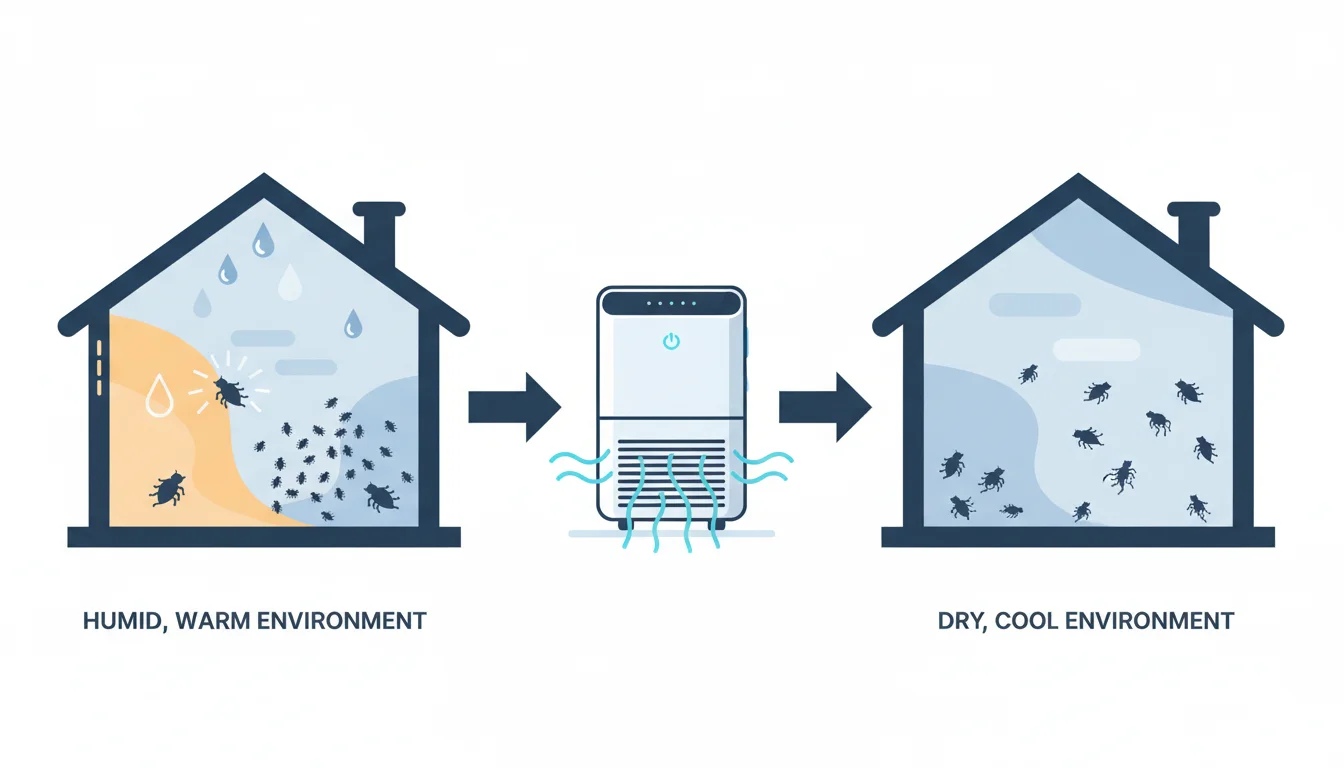
Dehumidifiers kill flea eggs and larvae effectively when humidity stays below 50% for multiple days. However, they do not kill adult fleas living on your pets or pupae protected inside cocoons.
Here is an honest breakdown of what dehumidification accomplishes:
- Kills effectively: Eggs exposed to dry air, larvae in carpets and bedding, some exposed adults
- Does not affect: Fleas feeding on pets, pupae in protective cocoons, fleas in humid microclimates
- Works better for: Prevention after treatment, small enclosed rooms, dry climates
- Struggles with: Active infestations, large open spaces, humid regions
Room size matters tremendously. One documented test showed a small room cleared of fleas after two days of dehumidifier operation. A larger room with the same equipment caught six fleas the night after treatment and two more the following day.
Dehumidifiers work for flea control as a supporting measure rather than a primary solution. Pets continue producing new eggs daily while adult fleas feed and breed. A single female flea lays 40-50 eggs per day. Those eggs fall into carpets and bedding where, without low humidity, they develop into the next generation within two weeks.
Why Dehumidifiers Alone Won't Solve a Flea Problem
Adult fleas on pets receive hydration from blood meals and remain completely unaffected by room humidity levels. This host-parasite relationship defeats any environmental-only approach.
The numbers work against you. One female flea produces up to 2,000 eggs in her lifetime. Even with perfect humidity control killing 95% of environmental eggs and larvae, the surviving 5%—plus continuous production from pet-based adults—keeps the infestation cycling.
Flea pupae present another problem entirely:
- Protected inside silk cocoons that resist desiccation
- Can survive dormant for up to five months while waiting for vibration or CO2 from a host
- Emerge as hungry adults ready to jump onto pets immediately
- Cannot be killed by humidity reduction alone
Furniture, carpets, and pet bedding create humid microenvironments even when room humidity reads below 50%. Deep carpet fibers trap moisture. The underside of cushions stays damp. These protected spaces shelter developing fleas from your dehumidifier's effects.
Using a dehumidifier for natural flea control works only as part of a complete strategy. Woodstream emphasizes that cloth items need hot water treatment and thorough vacuuming to remove all flea life stages.
Integrating Dehumidifiers Into Comprehensive Flea Control
Effective flea elimination requires attacking every life stage simultaneously. Dehumidification handles environmental eggs and larvae while other methods address pets and protected pupae.
Follow this sequence for complete elimination:
- Treat all pets first with veterinarian-approved flea prevention products. This stops new egg production at the source.
- Vacuum thoroughly every carpet, rug, upholstered furniture, and crevice. Dispose of the vacuum bag in a sealed plastic container outside your home.
- Wash all fabric items including pet bedding, human bedding, curtains, and removable covers in hot water above 140°F.
- Run your dehumidifier continuously to maintain humidity below 50%. Use a hygrometer to monitor levels.
- Apply diatomaceous earth to carpets and pet sleeping areas. This powder cuts flea exoskeletons and kills fleas within 48 hours.
- Continue the protocol for two to three months minimum to catch pupae as they emerge.
The timeline matters because flea pupae survive low humidity inside their cocoons. You need sustained environmental control long enough for all dormant pupae to emerge and die before finding a host.
Best Practices for Using Dehumidifiers Against Fleas
Target 45-50% relative humidity for flea control while maintaining human comfort above 30%. Extremely dry air causes skin irritation and respiratory discomfort for household members.
Strategic placement maximizes effectiveness:
- Position the dehumidifier in rooms where pets sleep and rest most frequently
- Close doors to concentrate the drying effect in target areas
- Move the unit between rooms if treating multiple areas sequentially
- Place near carpeted areas where eggs and larvae accumulate
Run your dehumidifier continuously during the treatment period. Intermittent operation allows humidity to spike, giving flea eggs survival windows. Empty and clean the reservoir daily to prevent mold growth in the collected water.
Whole-home dehumidification through HVAC systems treats severe infestations more effectively than portable units. The cost-benefit calculation depends on your situation. Professional flea treatment runs $200-400 per visit, while a quality dehumidifier costs $150-300 upfront plus electricity. For recurring flea problems, the dehumidifier investment pays off over multiple seasons.
Fair warning: your electricity bill will increase noticeably with continuous dehumidifier operation. Budget an extra $20-50 monthly depending on your unit size and local rates.
FAQ
How long does a dehumidifier take to kill fleas?
Sustained humidity below 50% for at least two to three days kills exposed flea eggs and larvae. Complete infestation elimination requires maintaining low humidity for two to three months to catch all emerging pupae.
What humidity level kills fleas fastest?
Humidity below 50% relative humidity causes flea eggs and larvae to desiccate. Dropping to 40-45% speeds the process while remaining comfortable for humans and pets.
Do fleas die in winter from low humidity?
Indoor heating reduces humidity and slows flea development, but heated homes with pets still support flea populations year-round. Outdoor fleas die in freezing temperatures, but indoor infestations persist through winter.
Can I use a dehumidifier instead of flea spray?
No. Dehumidifiers kill environmental stages only. Flea sprays with insect growth regulators affect fleas at all stages and work faster for active infestations. Use both for complete control.
Will air conditioning help kill fleas?
Air conditioning reduces humidity and lowers temperatures, creating less favorable conditions for flea development. This effect supports but does not replace targeted flea treatment.
How do I know if my dehumidifier is working against fleas?
Use sticky flea traps to monitor populations. Place traps near pet sleeping areas and check weekly. Decreasing trap catches over two to three weeks indicates your combined treatment strategy is working.
Are some dehumidifier types better for flea control?
Desiccant dehumidifiers work better in cooler temperatures below 65°F. Compressor dehumidifiers perform better in warm conditions. Match your unit type to your climate for consistent humidity reduction.
Should I run a dehumidifier after fleas are gone?
Maintaining humidity below 50% prevents reinfestation by killing any new eggs brought in by visiting animals or on clothing. Seasonal dehumidification during humid months provides ongoing protection.
Share this post
Related Articles
Would a Dehumidifier Help With Asthma? What Science Says in 2026
Would a Dehumidifier Help With Asthma? What Science Says in 2026
Best Dehumidifier for RV: Complete Buyer's Guide for 2026
Best Dehumidifier for RV: Complete Buyer's Guide for 2026
Will a Dehumidifier Get Rid of Silverfish? Complete Guide to Humidity-Based Pest Control
Will a Dehumidifier Get Rid of Silverfish? Complete Guide to Humidity-Based Pest Control